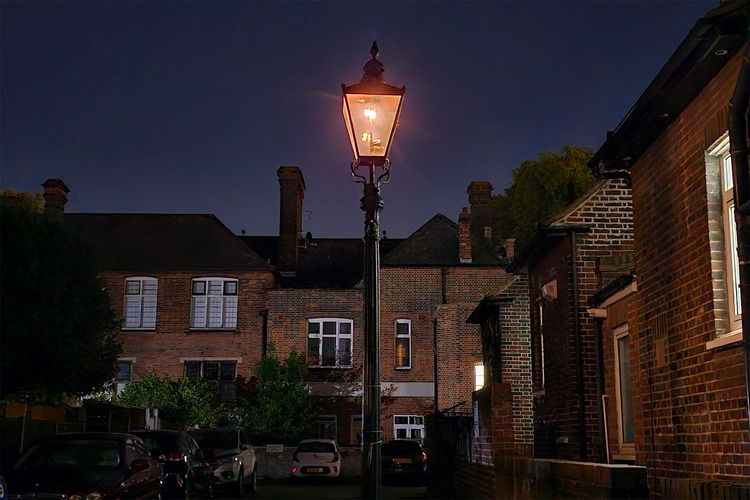
Residents of a historic East London street have submitted plans to replace their traditional gas lamps with LED lights, while heritage groups seek to protect the few remaining in the capital.
The residents’ association of Malam Gardens in Poplar have applied to Tower Hamlets Council to replace the lamps, which have lit the street for over 100 years, and which make it the last street in East London lit by gas.
The houses were built in the 1930s for employees of the Commercial Gas Light and Coke Company, and to be a ‘pure-gas estate’, specifically to prove that homes could be run on gas alone and that this power source remained reliable, even as electricity took over.
The London Gasketeers, headed by Luke Honey and Tim Bryar, work to protect London’s historic gas lamps.
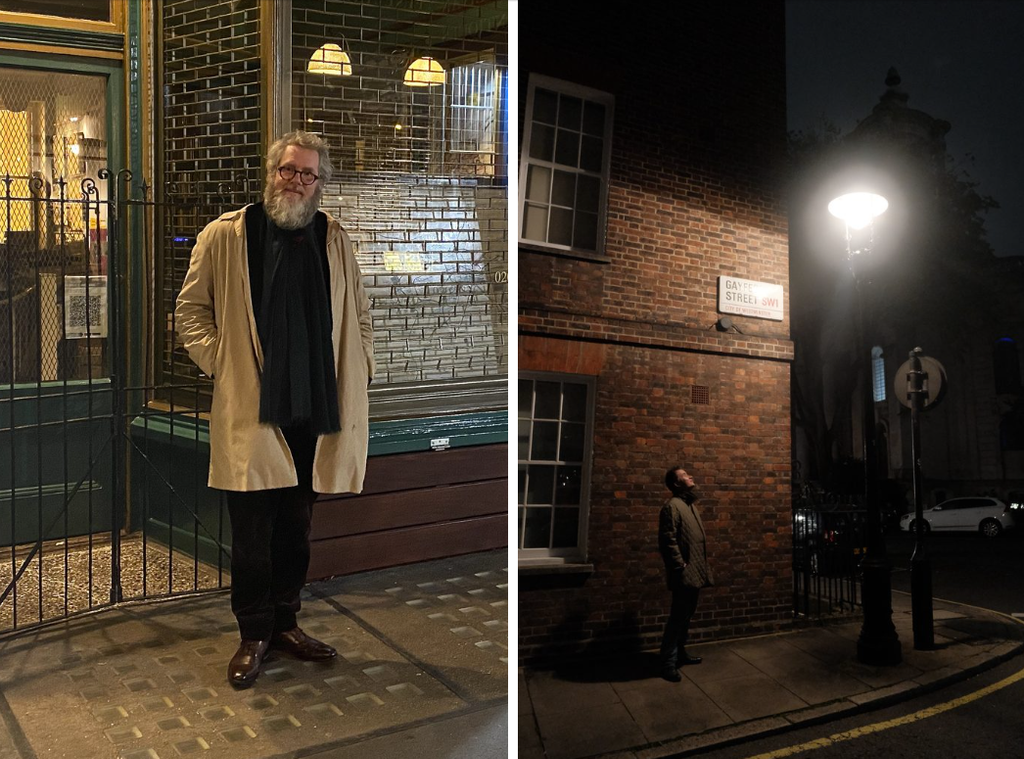
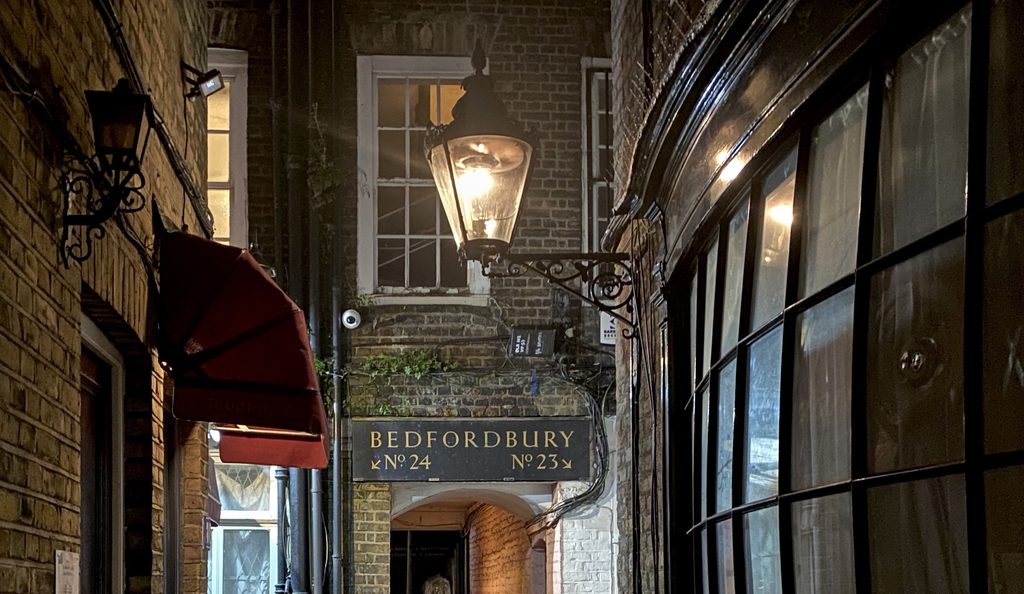
Their 2022 campaign to save the gas lamps in Westminster from being replaced by electric lights means that lamps in Westminster and Covent Garden are now protected by a listed status awarded by the council.
However, the lamps in Malam Gardens do not have the same protection.
Honey said: “Most of the gas lamps in London are in Covent Garden and the Westminster areas, so for gas lamps like that to survive in East End, particularly with all the damage caused by the Blitz and the way a lot of these gas lights were removed en masse in the 1950s and 1960s, it’s very rare.
“There are all sorts of eco reasons to keep them: dark skies, anti-light pollution, they’re very good for biodiversity, and very good for insects. Emissions are also tiny in the wider scheme of things.
“Malam Street is a private road, but we’d urge the local residents to have the original lamps overhauled by the London lamplighters and maybe add an extra light or two if needed.”
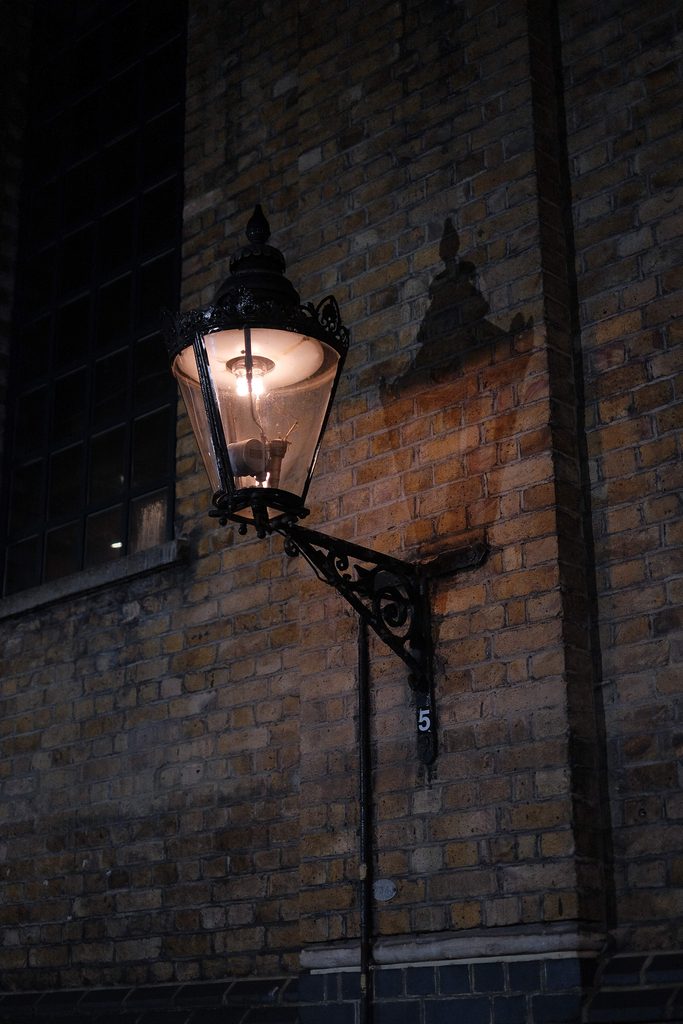
The street, named after the pioneer of the gas meter, John Malam, is run by the residents’ association, who submitted the plans to replace the five gas lamps with seven LED lights.
They also sent plans to replace the lampposts with heritage replicas that emulate the original lights’ colour.
A heritage report states that the gas lamps and the connected history “make the asset a rare example, with few surviving parallels in the country.”
It also said: “Their continued use of gas to provide light provides a legible link to the asset’s history and the wider legacy of gas lighting in London, kept alive by a small team of “lamplighters” – engineers who maintain and manually wind mechanical clock mechanisms every fortnight.”
A Tower Hamlets Council spokesperson said: “The application to replace the lamps will be determined on its merits and will consider the local and national policy regarding the preservation of heritage assets.
“It is not known why the residents have applied to replace the lamps, but it is understood that one of the original five no longer works due to being hit by a vehicle, making light levels a concern.
“However, this part of London’s heritage and the specific link to the history of gas power makes this an unusual example that many consider worthy of protecting.”
Featured image credit: IanVisits.

Join the discussion