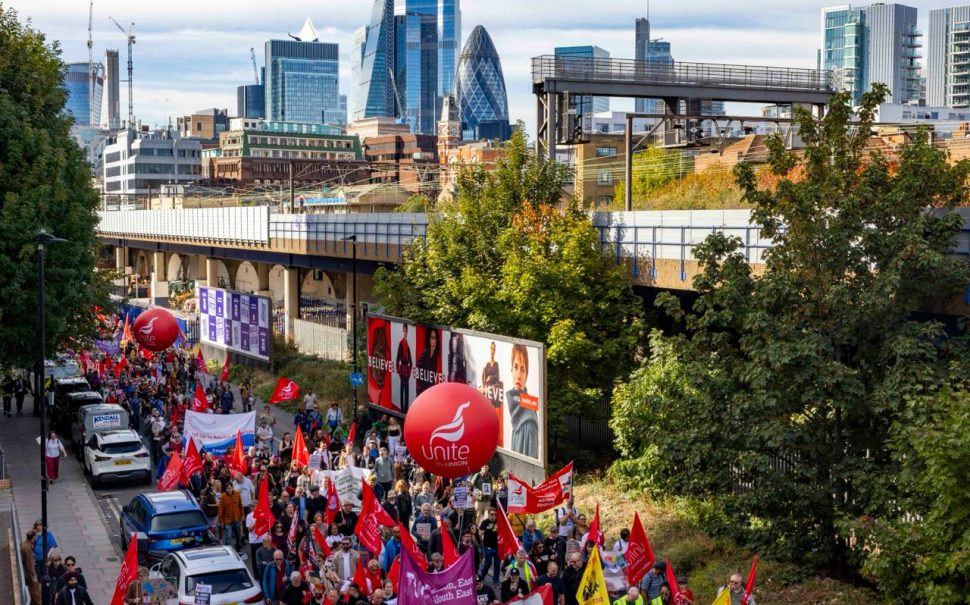
Trade union leaders, MPs, and academics have praised this month’s commemorations marking the anniversary of the ‘Battle of Cable Street’.
Around 10,000 rallygoers took to the streets on October 4 for a mile-long procession from Tower Hamlets Town Hall to St George In-The-East Church on Cable Street, including parliamentarians Jeremy Corbyn, John McDonnell and Apsana Begum.
Exactly 90 years earlier in 1936, a quarter-million Londoners rallied along Cable Street in Tower Hamlets, preventing British Union of Fascists (BUF) leader Oswald Mosley and 5,000 ‘blackshirts’ from marching through the largely Jewish East End.
Begum, whose constituency includes Cable Street, said in the House of Commons: “the anti-fascists at the battle of Cable Street did not have a blueprint, but they left us one with their sheer courage.”
The Poplar and Limehouse MP had secured an adjournment debate about the anniversary in parliament, and asked ministers to pay tribute to the commemorative march.
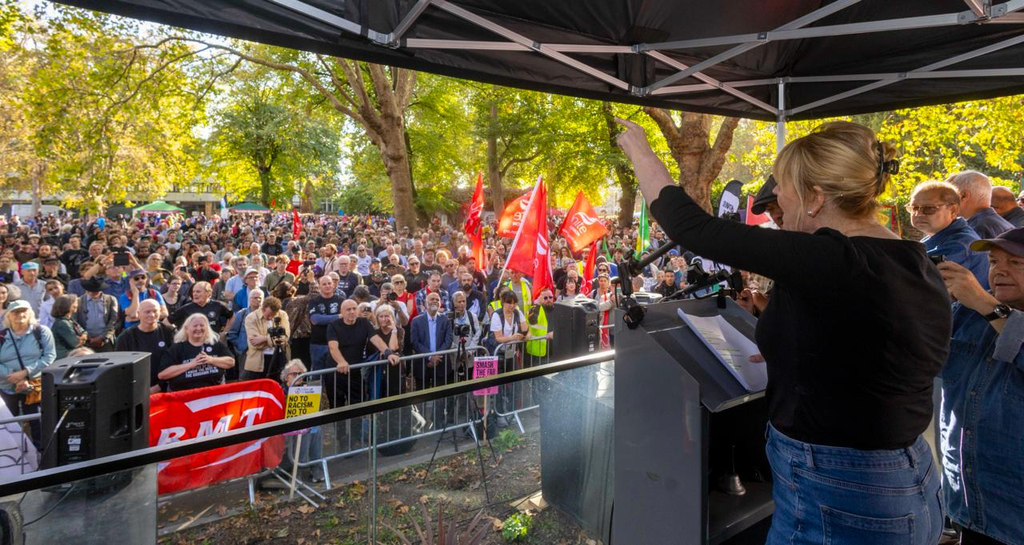
Among attendees were representatives of London’s Jewish community.
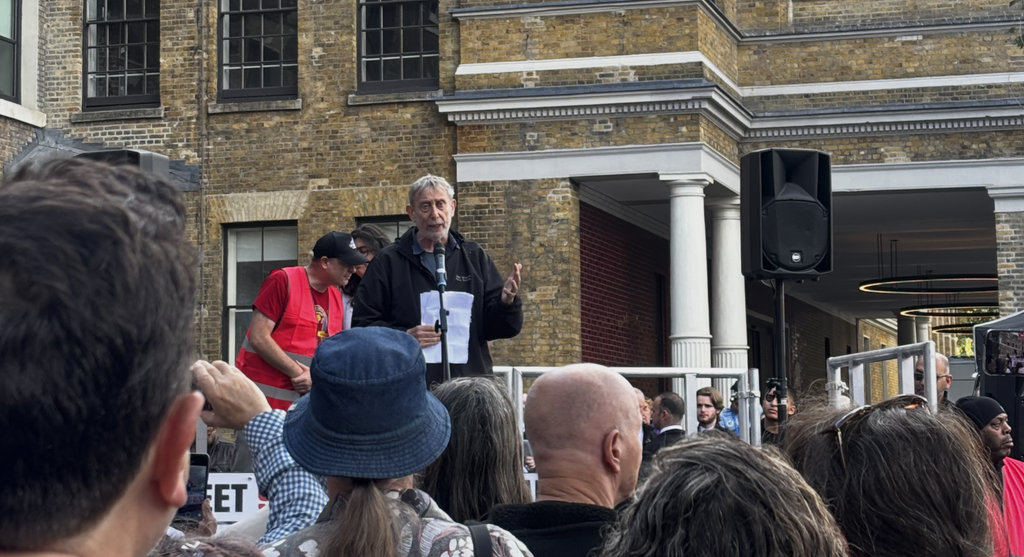
Poet Michael Rosen – whose parents Harold and Connie were at Cable Street in 1936 – spoke, and the Great Yiddish Parade band provided an orchestral backing throughout.
Martin Farr, Senior Lecturer in Contemporary British History at Newcastle University, said: “What you need is the muscle memory of Jews, who have a history of pogroms and worse, and that’s very powerful.
“Unless you keep reminding people of this, it comes back.”
Farr noted the anniversary’s particular importance for British Jews, and praised the community’s involvement.
He argued that Mosley was able to spin extreme hatred as an attractive vision in rallying support before Cable Street, and warned against the threats posed by similar demagogues.
He said: “They have the ability to alchemize base metal into gold in the sense that they can give this an air of authenticity, an air of eloquence, which is very dangerous and very hard to counter.
“He gave credibility and credence to essentially pub bigotry.”
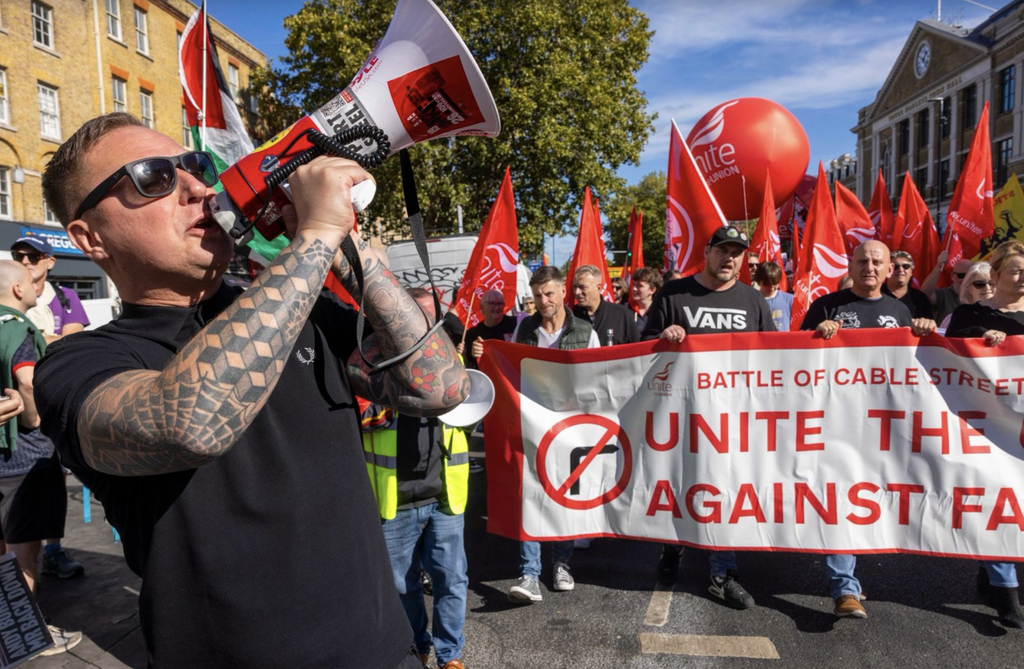
Joe Rollin, an organiser for trade union Unite involved in planning the event, celebrated the diverse backgrounds of those marking Cable Street this year.
He said: “Tower Hamlets throughout history has always been a melting pot.
“But we’re seeing the pointing of blame to migrant communities who really aren’t to blame for the problems in society.
“We need to get the anti-fascist message and anti-racist message into our workplaces.
“That’s where the most important work is. This is a good start, but there’s lots more to come.”
The Office for National Statistics (ONS) data shows that 46.8 per cent of Tower Hamlets residents were born outside the UK, the highest being Bangladeshi and Italian-born populations nationally.
The borough is also home to the largest percentage of Muslim residents in any local authority, with 39.9 per cent of its population identifying with the religion in 2021.
The area has been targeted by anti-immigration groups in the past. Most recently, in 2025, Met Police blocked a planned march by UKIP leader Nick Tenconi through the borough, which called on supporters to “reclaim Whitechapel from the Islamists”.
Met Commander, Nick John, said of Tenconi’s event: “It is our assessment that there is a realistic prospect of serious disorder if it was to go ahead in the proposed location.”
Rollin champions the ‘Unite for a Worker’s Economy’ collective action campaign, which began in 2022 and generated 214 thousand impressions across social media through Cable Street-related content this year.
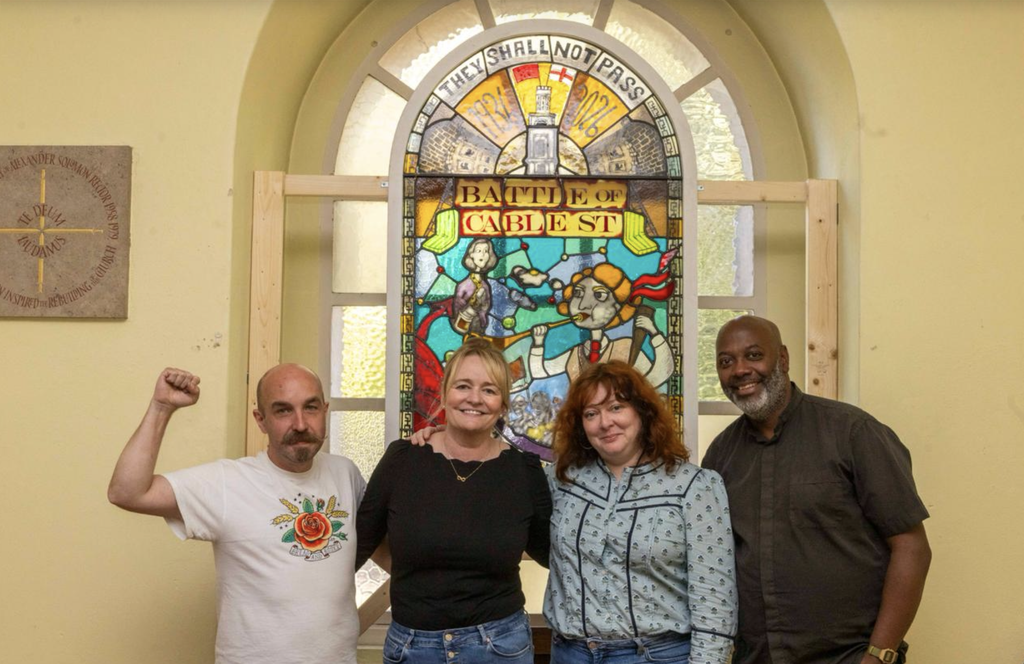
Unite have commissioned a number of art pieces celebrating 1936, including a mural at Clapton Community Football Club and a commemorative stained-glass window at St George In-The-East church.
Created by glass artist Keira McLean and cartoonist Jamie-Max, the window celebrates ‘all those who struggle against fascism’, and prominently features Unite’s logo.
Jamie-Max said: “We’re two people who document and try to stimulate conversation of what these things can be and what we can achieve from stories of the past.
“The stained glass will continue to be a talking subject, a signal of what Cable Street is and what it can be in today’s societies.”
Jamie-Max is proud of the partnership, and hopes to have left an enduring anti-fascist legacy through working with McLean and Unite.
The 300-year-old church was firebombed in 1941 during The Blitz, and the window’s installation is the latest addition to a modern interior created in 1964 to restore St George In-The-East to working order.
Unless specified, all image credits belong to Mark Thomas
Featured image credit: Mark Thomas
Join the discussion