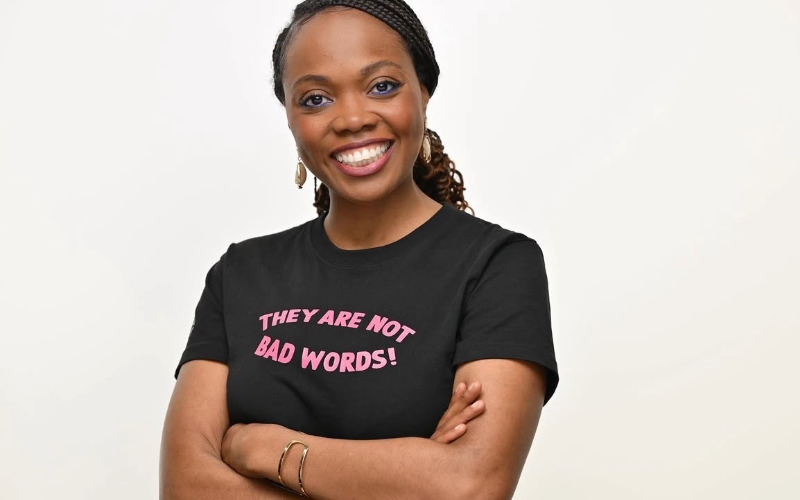
A West Midlands GP and educator brought her interactive gynae-themed obstacle course to London’s Everywoman festival.
The festival on Saturday 13 June at Islington‘s Business Design Centre had over 1000 attendees, with a main stage and many educational tents on all things women’s health.
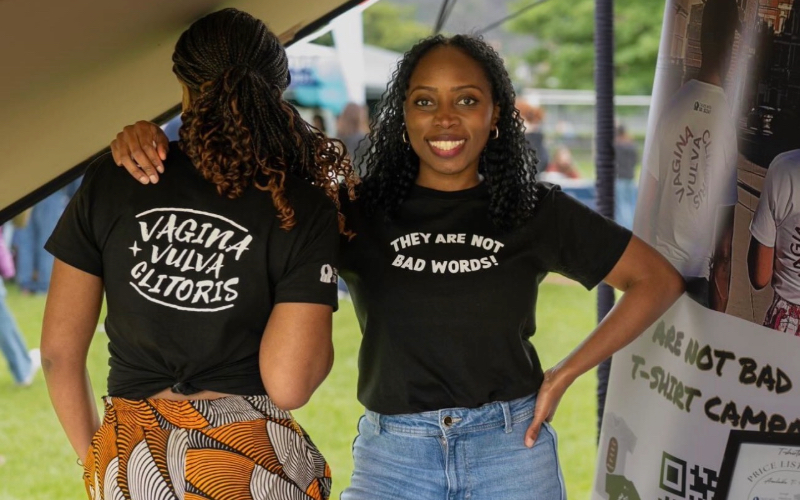
The workshop formed part of Dr Aziza Sesay’s ‘They’re Not Bad Words’ campaign aims to break down the stigma and shame surrounding gynaecological health by encouraging open conversations about gynaecological anatomy, condition sand symptoms.
Through interactive activities and wider intergenerational education, she hopes to make women’s health more accessible and empower people to seek help without embarrassment.
She said: “Women are literally dying of embarrassment.”
She emphasised the importance of destigmatising and normalising the words, vagina, vulva and clitoris because it will encourage more women to feel comfortable to use them.
It also means they will have the lexicon to describe exactly where they are experiencing symptoms and can advocate for themselves.
Dr Sesay shared the story of a patient who delayed seeking medical attention and only came after experiencing excruciating pain from a massive vulval lump.
After examining her, she knew it was cancer. The patient died a few months later, underscoring the importance of early detection and treatment.
She highlighted how cultural beliefs and interpretation of religious teachings contribute to stigma arounds women’s health.
Dr Sesay said: “It’s not just the black community or South Asian community.
“It’s also within the white British community. There’s a lot of shame and stigma around these aspects and it is intergenerational.”
She spoke of her own experience of coming from a traditional Muslim family where they did not talk about periods despite being of the age and having two older sisters.
Dr Sesay said: “I didn’t know about periods until I think I was 11 or 12 years old
“I’d never heard of the word vagina until I was around 13, 14 – and never heard of the vulva until I was at uni.”
She believes her experience reflects a wider reluctance to talk openly with children about certain topics, which contributes to children internalising the idea that these topics including gynaecological health are bad or shameful.
She emphasised the importance of age-appropriate education for children.
Dr Sesay said: “We know that predators and sexual abusers tend to avoid children who use the correct terminology because then they know that the child has been taught about body safety and sexuality.”
Her hope is greater education for all, public awareness campaigns and research into gynaecological conditions and diseases will improve outcomes for women and save lives.
However, Dr Sesay cautioned education alone is not enough, arguing there are wider societal and healthcare barrierswhich contribute to the shame, stigma and embarrassment surrounding gynae issues.
These include medical misogyny, and women feeling dismissed and not listened to.
She said: “Medical misogyny exists – they’ve spoken about it in the Women’s Health Strategy.
“There are so many aspects of medicine and healthcare where misogyny exists in terms of women being given pain relief, their pain being believed and being dismissed.
“It’s worse for women, but as soon as you add different intersectionality e.g., ethnicity, disability or the LGBTQ community and so on, it’s even worse for those groups.
“It’s something that needs to change.”
It was against this backdrop that Dr Sesay’s gynaecology-themed obstacle course made its way to Everywoman festival in London, where some attendees took part in the interactive experience.
Zaynah Ahmed, attendee who suffers from endometriosis and adenomyosis said she had been following Dr Sesay on her social media for a while for a her informative and engaging content.
She said: “I really enjoyed the course.
“I think it’s important for all generations young and old.
If one person gets involved in the campaign, for example, myself, I can talk to my mum about it, my grandma and my sisters.
“And then you’re influencing people from different generations to have a new outlook”
Over 20,000 women and people with gynae organs are diagnosed every year with cancer with 21 people dying every day from their diagnosis, according to The Eve Appeal.
Dr Sesay added a lack of representation in medical campaigns and educational materials can leave women unaware of their health risks.
She recalled speaking to a black woman who told her she never knew black women could get breast cancer because she never saw any with cancer in a campaign.
Dr Sesay believes healthcare services should focus on being more accessible, culturally aware and inclusive rather than labelling communities as “hard to reach,” “or difficult to engage.”
She said: “We need to try our best to provide resources and services that make us easier to access.”
The non-profit campaign funds menstrual health workshops in Sierra Leone where Dr Sesay is from.
Female genital mutilation is a common practice in Sierra Leone where 83% of women between 15-49 years old have suffered it.
The campaign teaches girls about their anatomy, what a normal and abnormal period feels like, and equips them with skills and kits to make handmade period pads to overcome period poverty.
Dr Sesay said she hoped those who attended the course would leave feeling confident and empowered.
She added: “I hope that they remember that vagina, vulva and clitoris are not bad words.”
Featured image courtesy of Dr Aziza Sesay

Join the discussion