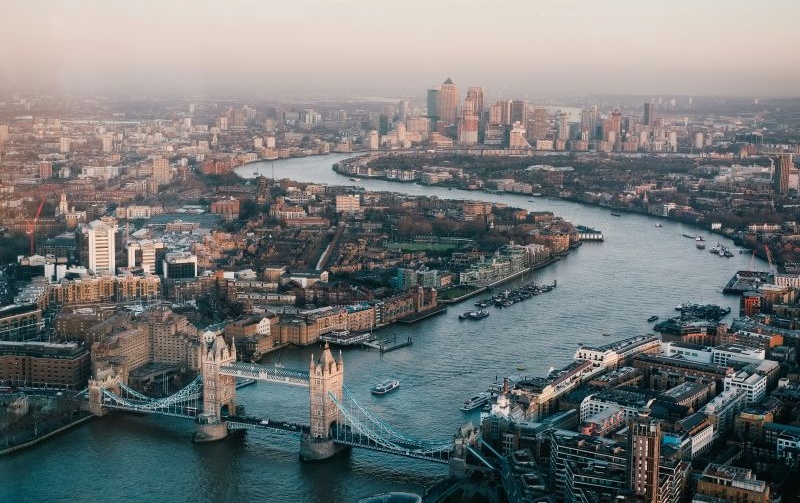
At first glance, new data from the Office for National Statistics tells a reassuring story that despite vast wealth gaps, London’s richest and poorest boroughs record a similar proportion of deaths each year.
But just beneath the surface a starker picture emerges – residents in deprived parts of the capital are dying younger.
Figures from 2023 show nearly twice as many residents in Kensington & Chelsea are aged over 70 compared with Barking & Dagenham, which is even more damning when factoring in that premature deaths in the east London borough were almost twice as high.
Will Snell, founder of the Fairness Foundation charity, said : “The scale of inequality in the capital has significantly worsened in the last 30 to 40 years.
“What’s really changed, and made London an especially unfair city if you live in poverty, is that the absolute wealth difference between the richest and poorest has grown exponentially thanks to factors like huge rises in asset prices.”
The Fairness Foundation aims to challenge how the public and policymakers think about equality, with Snell arguing social standing, including income, employment and housing, has a direct impact on both physical and mental health, and life expectancy.
In Barking & Dagenham, an estimated 23% of residents earned below the Living Wage in 2025, whereas in Kensington & Chelsea, the figure was just 9%.
The fact that only 5% of Barking & Dagenham’s population is over the age of 70 is partially due to a particularly large younger population.
In the latest figures, it had 30% more residents under the age of 20 than in Kensington & Chelsea.
For many young Barking & Dagenham residents, it is their experiences of accessing services on the NHS which fall short in comparison to other Londoners.
Faith, 23, who does not want to share her surname, has lived in Dagenham with her family her whole life.
She said: “I have a friend from university who grew up in Fulham, near Chelsea, and she says there would never be a time when she’d have to wait more than a day to talk to her GP.
“Whereas here in Dagenham, you could be waiting a week for a five minute appointment.
“It’s things like that that make you go, ‘hold on, we’re all paying the same rate of tax, we’re all living in the same city’.”
In 2023, premature deaths in Kensington & Chelsea stood at 224 per 100,000, which nearly doubled to 400 people per 100,000 in Barking & Dagenham.
The ONS defines a premature death as someone who died before turning 75 from any cause.
Given that residents in both areas rely primarily on the NHS for medical care, the disparity in the over 70 population between the boroughs could be interpreted as a consequence of the extreme pockets of wealth and poverty that can exist within the same city.
A large part of what foodbank charity Trussell – formerly Trussell Trust – advocates for is increased awareness of the well-documented link between low incomes and long-term health outcomes.
Trussell’s head of policy Ayaz Manji welcomed the government’s decision to lift the two child benefit cap, a move predicted to help lift 450,000 children out of relative low income households, but added more action is still needed to alleviate poverty rates.
He said: “The amount of support people receive from the social security system is simply not keeping pace with the cost of living.
“We need more momentum if we’re serious about driving poverty out of the UK.”
Among the policies advocated by Snell and Manji is the total removal of the benefits cap, increased housing allowance rates and more wealth taxes.
But with the welfare bill already predicted to climb to £330 billion by the end of 2026, further tax increases to fund higher benefits risks alienating middle income voters, many of whom are struggling with the cost of living.
But the facts do not change with the politics of the day.
Campaigners are determined to change the reality that, in 2026, people in one of London’s most deprived boroughs are simply not living long enough to grow old.
A spokesperson for the Mayor of London said: “Inequalities in housing, air quality, employment, education and access to green space are long-standing, deep-rooted and all have an impact on Londoners’ health.
“The Mayor believes every Londoner should have the same chance to succeed, that’s why he has put tackling these issues at the heart of his agenda.
“His work includes: delivering the world’s largest clean air zone; providing free school meals to all London’s state primary schoolchildren; and reducing Londoners’ exposure to junk-food marketing on the TfL network.
“These interventions don’t just improve health, they help reduce inequalities across the capital as we continue building a fairer, healthier and more prosperous London for everyone.”
The Department for Health was approached for comment.
Featured image: Free to use from Unsplash/Benjamin Davies

Join the discussion