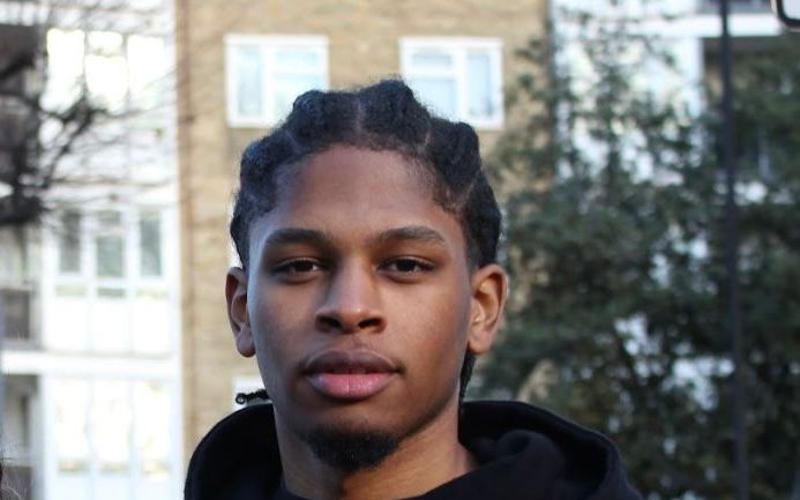
A 19-year-old is vying to become Hackney’s next deputy mayor, amid the looming London borough elections.
Age has been a big topic of conversation around Dylan Law since his announcement to run alongside existing Green Party councillor Zoe Garbett when they announced their run, with Law being one of the youngest candidates for deputy mayor in the London local elections this year.
But having spent five years on the Hackney Youth Parliament, alongside his involvement in local politics throughout his school years growing up in the borough, Law is one of the latest examples of young councillors aiming to take executive positions across the country.
“It was very natural, and it wasn’t like a very big decision I had to make. It was more just what felt right,” Law said on his decision to join Garbett on the mayoral ticket. “The opportunity opened up, and that turned into hype very quickly.”
The opportunity had opened up fast. Law described being “really interested” in politics, and saw experience in the town hall and the local elections as avenues into it. He landed on the local Greens after spending time in the townhall before being chosen by the party:
“I did it all between two months, from knowing nothing to knowing a lot. After launching the campaign [with Garbett], we got selected in five months, and learnt everything in the past 13 months.”
However, the hints of a partnership between him and Garbett revealed itself much earlier. Law had first met his future running mate when he was just eight, years prior to him bumping into her at the Hackney town hall in January last year:
“I walked in thinking, I recognise her, and from then on we became close. It was a couple of months before we announced that we decided we will do the main event together,” said Law.
The Greens, who have had a 45% rise in membership numbers since Zack Polanski became its leader earlier in 2025, appealed to Law following frustration with the local Labour Party, whose councillors currently control the Hackney borough.
“I always had my very strong principles, and [Labour’s] were very misaligned with mine.”
Law stresses the importance of collaboration, but also expresses frustration with the use of consultants in decision making and more so, the council’s neutrality on issues affecting its citizens.
He alludes to Labour’s weakness against academies in Hackney – a hot topic in the borough following a report by Sir Alan Wood at the end of last year detailing that The Mossbourne Federation-run schools in the area fostered a “rigid” and “particularly harmful” approach to education, especially to its vulnerable students.
Concerns had been raised of discriminatory practices towards Black pupils who reported experiencing disproportionate punishment, SEND students being punished for behaviours linked to their disabilities, and concerns over a restrictive toilet policy which adversely affected menstruating girls.
“Labour’s response is, ‘we don’t have formative control’, which is technically true. But my response would be, I’ll push my remit, not only to the edge but if that does not work I’ll push it further,” said Law.
“At the end of the day, when you are elected by a population of 100,000 people, the responsibility is in your hands to fix it.”
“I wouldn’t be able to sleep at night, knowing I had done nothing about it,” he said.
Law also makes a clear difference between himself and fellow-19-year-old council leader George Finch who is a Reform-affiliated local politician in Warwickshire. He calls Finch’s position more of a “fluke” rather than a representation of more younger people getting into executive positions in the local council, due to existing councillors elected him leader as opposed to the general populace.
For Law, having been born and raised in Hackney, he saw how getting into politics in his local area first made the transition into politics easier. He described the dynamic he experienced when he first attended town hall meetings as distinct and unusual.
“I know it wasn’t natural, this dynamic in townhall, so it was very easy to take myself out of it and say ‘you lot are weird, not me’,” he said.
He references an incident in the county council where a Labour cabinet member told the man sitting next to Law to “tell your son to behave himself”, he recounts.
“I don’t appreciate that kind of dynamic, I found it very patronising,” said Law.
Nationally, it is unusual to have councillors close in age to Law and Finch – with the 2022 Councillors Census revealing 27% of councillors are over 70-years-old compared to just 2.1% of councillors being under 25-years-old – making young people disproportionally underrepresented in local government.
Despite this, the trend from 2018-2022 shows an 89% increase in the youngest demographic joining local politics, increasing the figure to over 200 councillors, a sign that younger people may be gaining ground in local politics.
“Depending on how this election goes, we can see where the trend is heading,” said Law, who sees a political career as a possibility for him.
“If I can prove my competence, there’ll be a very good signal that I can do more,” adds Law.
“But I want to have the proof in the pudding before I open my mouth too wide.”
Featured image credit: Dylan Law
Join the discussion