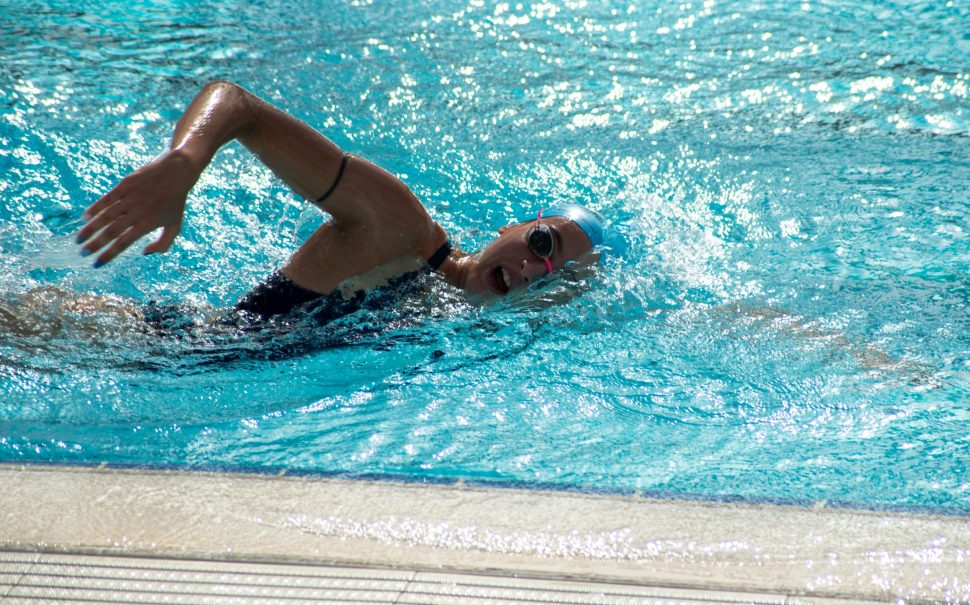
Tower Hamlets is aiming to tackle health inequalities among older women with a free swimming programme.
The borough has the second lowest healthy female life expectancy in London at 59, almost five years lower than the London average of 64 years, Office for National Statistics data reveals.
Healthy women in Tower Hamlets in fact live as much as 11 years on average less than London’s top borough, which is Richmond.
The borough’s council is trying to tackle this by offering a free swimming programme to all women over 16 living in the borough and all residents over 55 years old.
A council spokesperson said: “The programme was introduced to inspire more residents to be active, with a particular focus on groups who traditionally face more barriers to participation.
“Women, older adults, and those with health conditions are less likely to engage in regular physical activity, and swimming offers an accessible, low‑impact option that supports both physical and mental wellbeing.”
Besides being a place where people can exercise, the council pool brings together a community and provides a space for social interactions.
Gillian, 71, goes swimming at Poplar Baths Leisure centre twice a week.
She said: “Meeting my friends here for swimming, motivates me every time.
“There’s nothing better than going for a swim together and catching up in the changing room or over a cup of coffee afterwards.”
The programme offers women’s only sessions to make sure women of all backgrounds can swim comfortably and in a safe environment.
Gillian said: “I like that we have a session just for us women.
“You can feel quite vulnerable going to a pool and I feel less judged in this environment.”
The pensioner added she has felt an improvement in her fitness since she started swimming regularly and every day tasks have become a lot easier.
Swimming has shown to improve heart health, lower blood pressure, improve lung capacity, reduce joint pain, and increase bone strength.
A report published by Swim England stated that any amount of swimming exercise compared to those who engaged in none was associated with a 41% reduction in all-cause and cardiovascular disease.
Researchers Dr Brendon Stubbs and Professor Ian Cumming said: “Swimming remains one of the most popular forms of physical activity across the world.
It may offer a unique opportunity to promote, maintain and improve wellbeing across the lifespan, with potential to reach all individuals of society, regardless of gender, age, disability or socioeconomic status.”
The inclusivity of the sport was one of the reasons why the council chose it as free flagship exercise.
It is low impact, suitable for all ages and fitness levels and particularly beneficial for people with long‑term health conditions.
It is also an exercise which is easy on the joints so pretty much everyone can do it.
As inactivity levels rise significantly from the age of 75, it is important to provide exercise opportunities for this age group.
Besides the physical health benefits, swimming contributes to people’s wellbeing overall and across all age groups.
Children who learn swimming from a young age also show a quick development in key skills like walking and speaking.
Among youth and throughout adult life, swimming can have a positive impact especially on mental wellbeing, reducing stress and anxiety.
In later stages of life, swimming can help people to stay mentally agile and even slow the decline of memory.
Swimming might be an individual sport but swimmers can develop an important social network at the pool.
Swim England suggested that swimming can promote social inclusion and cultural enrichment but socio-economic backgrounds need to be taken into account.
Studies show that people from lower income background are more likely to be inactive and Tower Hamlets is one of London’s most deprived boroughs.
The data published by Sport England also shows that the divide in activity levels based on where someone lives is widening.
Only 58% of people living in the most deprived places are active compared to 69% in the least deprived places.
This could be because residents cannot afford to participate in certain activities or the infrastructure is not accessible to them.
By removing the price barrier, Tower Hamlets Council opened an activity for people who might not normally have the means to visit the council pool regularly.
The council spokesperson said: “The response from residents has been overwhelmingly positive.
“More than 20,000 people have already signed up for the free-swimming membership, far exceeding expectations.”


Join the discussion