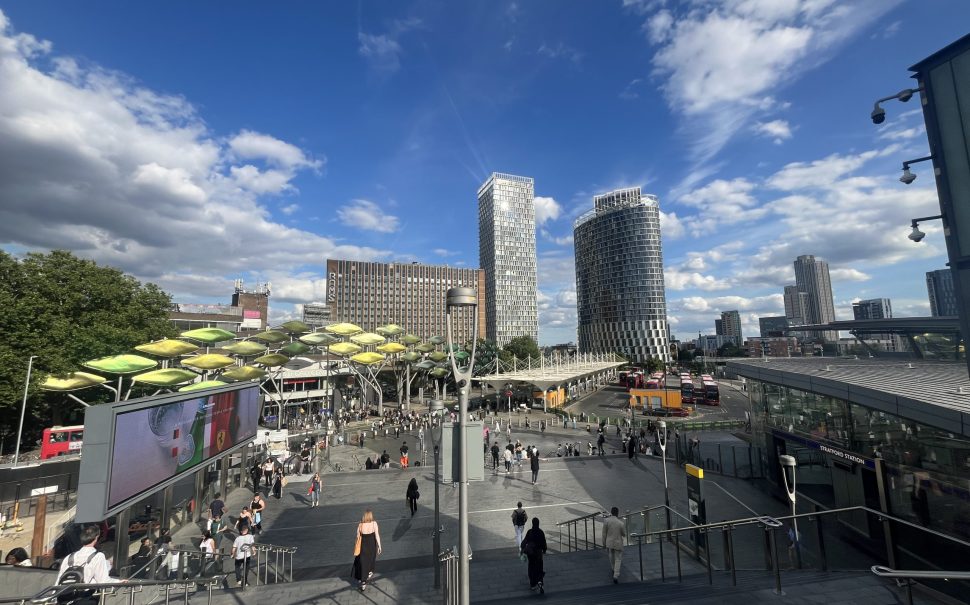
Newham was the second most-targeted London borough by Live Facial Recognition last year and is third so far in 2026, according to Metropolitan Police data.
Across 26 separate deployments in 2025, Live Facial Recognition (LFR) cameras ran in Newham for a total of 144 hours, scanning an estimated 550,000 faces.
Only Westminster – home to Parliament, Downing St, Buckingham Palace, and a hotspot for national political protests – recorded more, with 200 hours of deployment.
Lukasz Tomczak, 43, had come back from Poland to visit Newham, where he lived for 20 years.
“It’s not a free country any more”, he said, when informed that LFR was operating in the borough that day.
“I don’t like it. Why should they scan my face if I haven’t done anything wrong?”
The technology differs from CCTV – and London already has the most CCTV cameras of any city in the Western world – as people’s faces are biometrically scanned in real time to check their identities against a police watchlist.
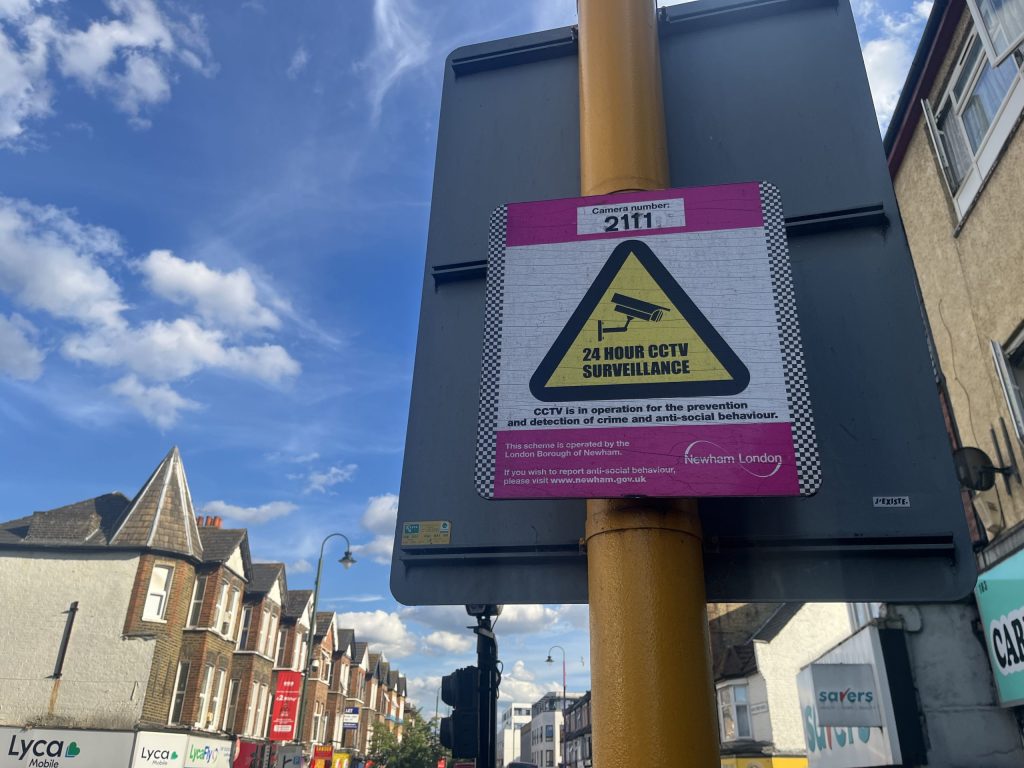
The Met first rolled out Live Facial Recognition (LFR) in 2020 and has been expanding its London-wide use year on year, despite historic Newham Council opposition to the technology.
Areeq Chowdhury, AI policy adviser and former Newham Green Party councillor, called LFR’s expansion ‘disappointing’.
He added: “Using an unregulated and intrusive technology, without democratic support from local people, is concerning.
“These deployments should be paused until there is proper regulation in place and residents should be given genuine transparency over how effective these tools are.
“Facial recognition surveillance isn’t like CCTV, it is the equivalent of fingerprinting people without their consent. We need to keep people safe but we also need to make sure we aren’t simply replacing frontline police officers with a dodgy AI system that we do not fully understand.”
A Newham Council spokesperson said: “Newham Council has no say or involvement with the Metropolitan Police’s use of Live Facial Recognition in our borough.
“It is a Met Police operation and does not use council resources or infrastructure.”
So far, the technology has operated on vans located at “crime hotspots”, but the Met will station fixed LFR cameras in six London areas by Christmas and hopes local councils will contribute to the cost.
Newham Council unanimously voted against the technology in 2023 and Councillor Amar Virdee, then Cabinet Member of Community Safety and Crime, released a public statement in July 2024.
“The deployment of this technology in public spaces infringes upon the privacy of our residents, subjecting them to surveillance without their consent,” Virdee said.
Met Police records from March 2023 show they were aware of Newham’s decision and set up meetings with Independent Advisory Groups which ‘allowed myths to be dispelled’.
Shri Senthal, 22, who works in Upton Park – a police hotspot for LFR in Newham – said he didn’t mind the principle of his face being scanned, but expressed concern about how safe the databases were.
He added: “I can’t accept it as I don’t know how they are saving that data – it could be hacked and they could unlock my bank details and whatever they want.”
In Newham in 2025, one person was falsely flagged on the system in Stratford Westfield, and six alerts were raised which were not confirmed as true or false.
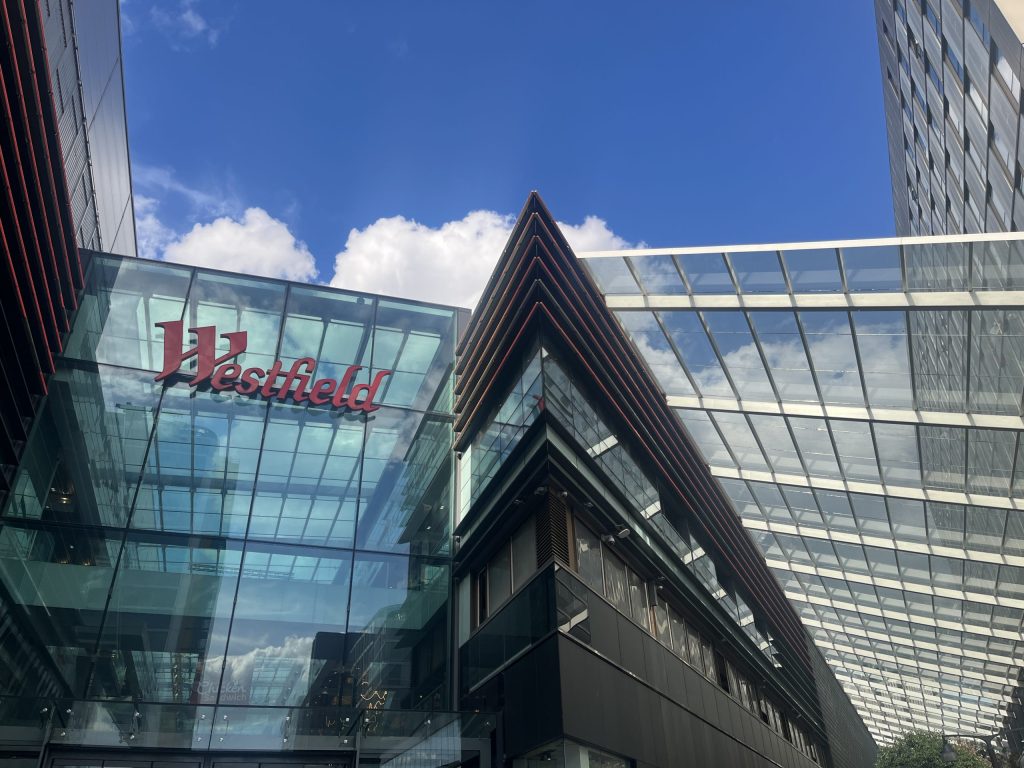
While these figures aren’t high, the impact can be devastating – Warren Rajah was falsely flagged by Facewatch (a separate retail live facial recognition system) in Sainsbury’s, as reported by the Metro earlier this year.
Yash Ayl, 42, who lives in Barnehurst but works in Newham for TfL, supports LFR if it’s used in the right way.
Ayl said: “If scanning my face is going to help the police identify the culprit then it’s a good thing, and if the data isn’t sold to any companies for other uses.
“It has to be accurate otherwise it’s pointless, and if people are misidentified then they should be compensated. I think it will get more and more accurate.”
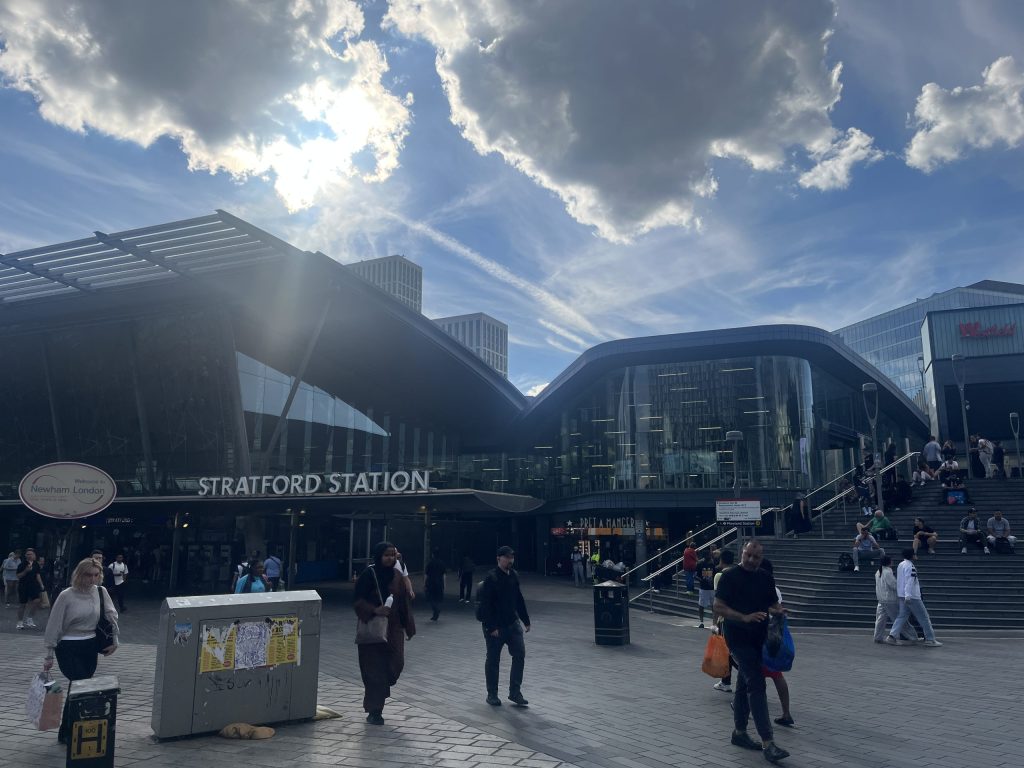
There were 294 alerts confirmed to be accurate in 2025 in Newham (97.67%), and in 2026 100% of Newham alerts were accurate, according to Met data.
The Met’s 2025 LFR report shows that they derive their own false alert rating using “estimated total faces seen”, which civil liberties organisation Big Brother Watch says overstates the algorithm’s accuracy.
On the day that one person was falsely identified, the Met claimed a false alert rate of 0.003% – calculated against over 30,000 faces scanned that day. But, as 12 people were correctly identified, that would give a false alert of 7.69% based on people the technology alerted.
ONS crime data shows that Newham’s crime levels were slightly above the London average in 2025 with 110.3 crimes per 1000 population compared to the average of 103.8.
This means Newham accounted for roughly 4.7% of the capital’s crime – but in 2025, it was subject to 11.6% of LFR deployments.
The question of why Newham is so heavily targeted was put to the Met but they declined to comment.
Jennifer Ellis, 55, from Battersea and visiting Newham on a day LFR was active, said: “It’s becoming more and more Big Brother. I don’t see any statistics that show Live Facial Recognition is stopping crime. There are other things they could be doing, like having more officers on the streets.”
Responding to the findings, Big Brother Watch said: “Communities in areas where this technology has been used are rejecting live facial recognition. We are at risk of becoming a nation of suspects, monitored by intrusive tech from the moment we leave the house – and this puts everyone’s privacy at risk.
“Everybody wants the police to catch wanted criminals, but the use of live facial recognition cameras around the country has seen misidentifications while officers spend hundreds of hours staring at screens rather than doing frontline policing work.
“There are still no specific laws governing this technology yet the police are rushing ahead with a huge expansion of it. We are calling on the Met to stop this experiment until, at least, Parliament has spoken.”
Met Police data shows that out of Newham’s 294 LFR accurate alerts in 2025, 136 of them resulted in arrest, while 31 resulted in “other action”, and 127 accurate alerts resulted in no police action (43%).
In 2026 so far, 49 of the 80 alerts resulted in arrest, 10 “other action”, and 21 resulted in no police action (26%).
The Met’s LFR 2025 Annual Report notes the outcome of checking someone’s compliance with court-imposed conditions, which might explain what “other action” refers to.
The Met Police declined to respond to the question of why someone would be on a police watch list if, when located, no police action is taken.
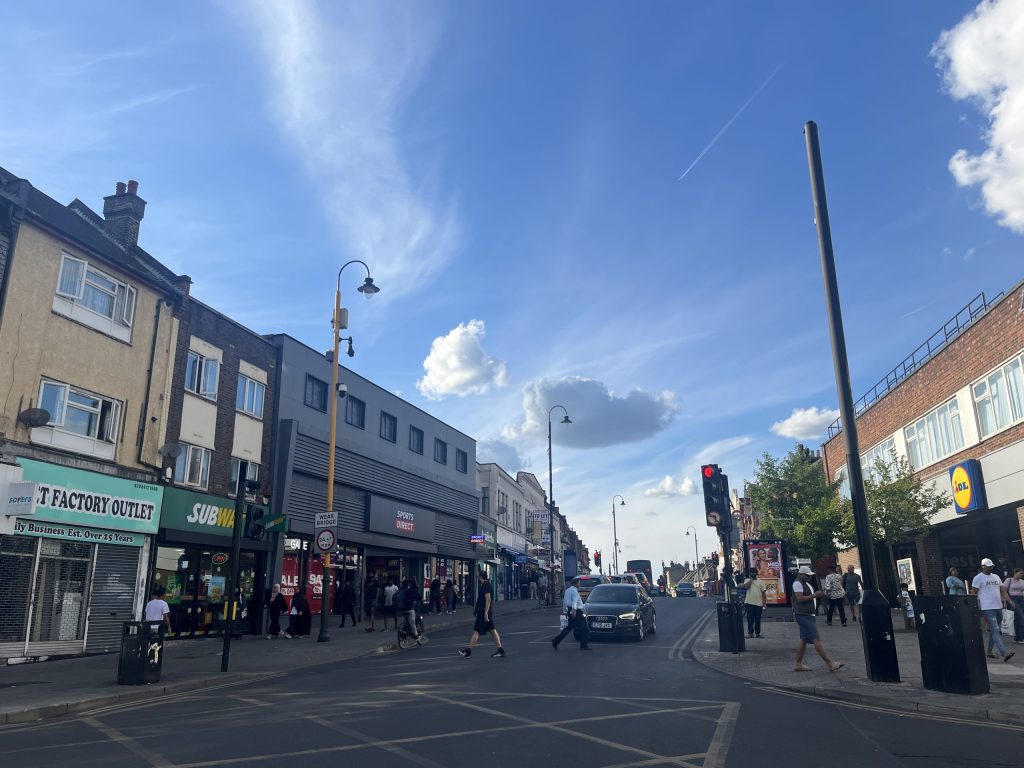
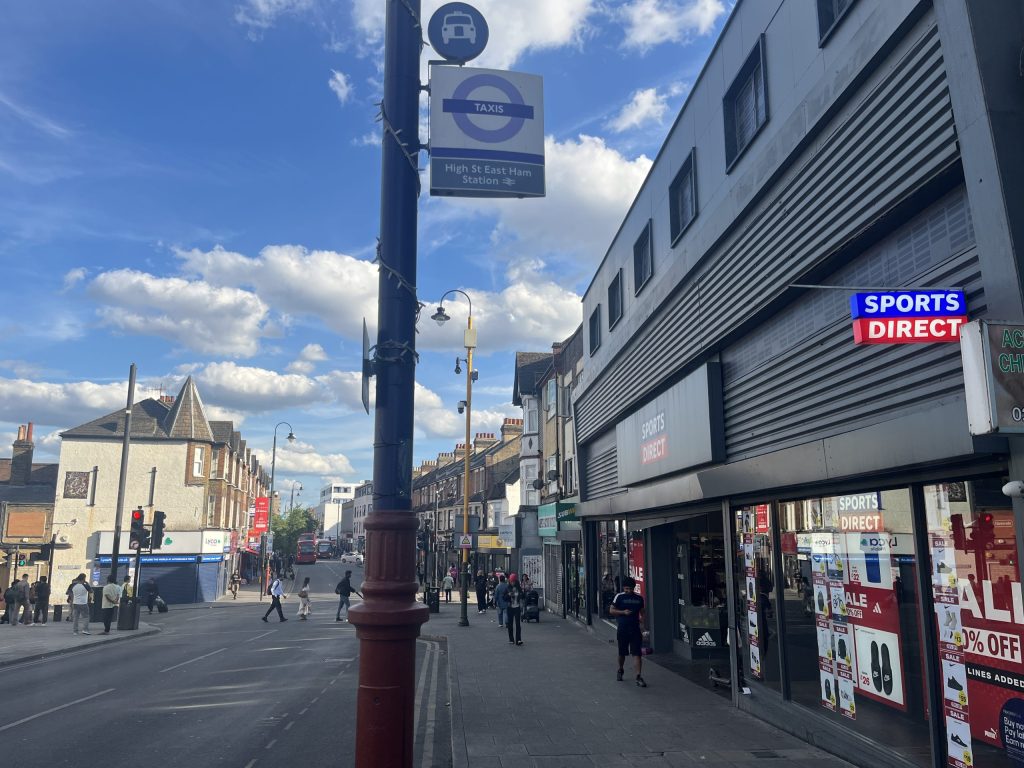
Redy Sri, 52, works in a phone shop up the road from the 24 June Live Facial Recognition deployment location outside Lidl and Sports Direct in East Ham, and supports the technology unequivocally.
Sri said: “We have to stay updated with technology in good ways and not bad ways. It’s inevitable that in every generation there are new technologies. There are cameras everywhere – on the tube and buses, so what is the problem?
“The police have to control and check for crime – it’s their duty. LFR is a very good thing and an easy way to catch criminals.”
Feature image credit: Ivy Burnett
Join the discussion