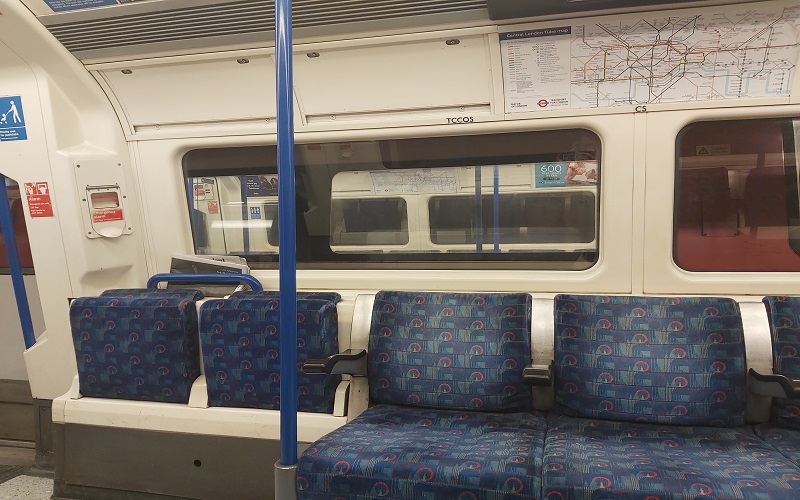
Fears of sexual harassment and misogynistic abuse are an unavoidable part of the daily routine for women commuting at night.
Women working unsociable hours feel unsafe commuting home late on public transport but have no alternative.
Rebecca, a 21-year-old nutrition and lifestyle coach based in London, explained while she does not feel safe on public transport, she has no other option, and her workplaces have never offered to pay for a taxi.
She said: “It would definitely help. It feels like half my wage goes on public transport but I don’t feel safe, especially when it’s dark.”
As a coach, her working hours are dictated by clients, as are the locations she works in. Meeting clients at their local gym means her route home frequently differs.
YouGov research from 2020 found more than half of women have been subjected to unwanted sexual behaviour while travelling on public transport in London.
Almost two-thirds (64%) of the victims were harassed on the tube.
Sophie, 23, a trainee nurse, said: “I take the bus or tube and I find my commute stressful on a safety level.”
Senior staff at the hospital she trains at have acknowledged the situation female staff are put in by the long hours, but no action has been taken.
The conversation around company accountability for incidents that occur due to employees having to leave their place of work late at night has grown in recent years.
In 2021 Unite Hospitality, a union representing the rights of hospitality workers, launched their Get Me Home Safely campaign after union member Caitlin Lee was sexually assaulted walking home from work after a midnight finish.
She said her employer refused to provide a taxi home. `
Unite calls for employers to provide free and safe transport home for all workers past 11pm.
A 2023 Unite poll revealed 58% of workers report their employers have never provided them with safe transport home after work.
Rachel Pain, Professor of Human Geography at Newcastle University, who has written extensively on gender-based violence and the built environment, said: “One of the most important things that comes out of research is the amount of low-level harassment.
“This harassment is particularly targeted at young women and the low-level stuff isn’t particularly low-level.”
Labelling some harassment as ‘low-level’, Pain argues, dismisses the impact this harassment has.
Sexual harassment affects those directly targeted but it also affects how safe all women and girls feel when travelling.
Pain explained witnessing or hearing others’ accounts of sexual harassment on public transport makes women more fearful.
This supports data from the Office for National Statistics (ONS) that found experiencing or witnessing harassment contributes to perceiving public transport as unsafe.
The ONS found people felt less safe using public transport after dark than during the day and 58% of women aged 16-34 reported feeling very or fairly unsafe using public transport alone after dark, the highest of any sex and age group.
Moreover, a 2019 Centre for London survey found women were twice as likely as men to mention personal safety as a barrier to using public transport.
The conversation about violence perpetrated by men against women and how to stop it has traditionally placed the onus on women to take preventative measures to not make themselves a target or place themselves in ‘risky’ situations.
But advice not to travel alone on public transport late at night is difficult to follow for women who have no other way to get home from work.
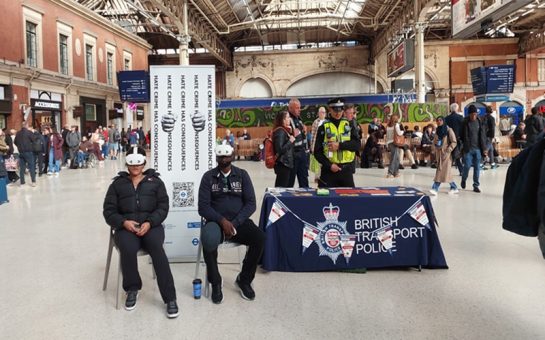
There have been numerous Transport for London campaigns trying to tackle the issue of sexual harassment on public transport.
In 2004 it launched the Women’s Action Plan and Safer Travel at Night campaign. In 2005, guidance was issued in Tube Tips for Women. In 2013, Project Guardian. In 2014, Report it to Stop it. Posters describing a zero-tolerance approach were put up across London in 2021.
And in January, TfL launched their latest campaign ‘Active Bystanders: Speak Up: Interrupt’.
Both Rebecca and Sophie are young women, travelling alone, often after dark.
They, like 58% of women in their age bracket, fear using public transport alone after dark.
But they do not have another option.
Photo by Sophia Massam

Join the discussion