
Stop and searches in North London have increased by a quarter on average in the past year, analysis of Metropolitan Police Service (MPS) data has revealed.
Of the six boroughs analysed, Barnet showed the largest percentage change, up 62% on the previous year, as the Met Police stepped up policing in North West London following a recent spate of antisemitic attacks.
Stop and search is a method used by the police to temporarily detain individuals in public suspected of carrying dangerous items such as weapons, drugs or stolen items.
Despite the sharp increase, Barnet still represents the lowest total number of stop and searches in North London with 3,075 in the past year, compared with Haringey which is the highest at 5,553.
Nonetheless, only 18% of stop and searches across these boroughs resulted in an arrest in the past year, a percentage which is unchanged from the previous year.
Where a reason was listed, the most common was drugs at a fifth of all cases in the past year across the six boroughs.
Zoë Garbett, the new green Mayor of Hackney, pledged to launch a review into stop and searches in her manifesto, and sat on the Police and Crime Committee at the London Assembly prior to being elected.
She said: “A lot of the time when people are asked if they think stop and search is a good thing, it’s in a vacuum.
“It’s not posed as ‘if we had £100,000 would you like more stop and search or a youth centre?’. The comparisons are never made around what actually keeps people safe. That’s what frustrates me.
“Yes, people are concerned about some of the behaviours they see in the community and crime and violence in their neighbourhoods, but I think it’s about really working with people to understand what truly keeps people safe.
“Yes, crime and violence may be increasing but that’s within the context of decimated public services, mental health support needed for young people, less and less local authority services and funding, so how are the police articulating that?”
Garbett hopes to embed public health and prevention into the work she carries out across Hackney Council.
Moreover, demographic analysis shows that black communities in all boroughs analysed are still disproprtionately targeted by stop and search.
On average in the past year in North London boroughs, 43.5% of stop and searches where ethnicity was recorded were carried out on those identified as black, despite black people only make up 13.5% of Londoners.
The highest figure shows 55% of Hackney’s stop and searches were carried out on those identified as black, despite only 21% of people in Hackney being black, according to Census data.
The same is true across all boroughs analysed, with the largest disparities in Hackney, Islington and Camden.
When compared to the previous year, in all boroughs included, the numbers of those stop and searched identified as black have increased in the past year, with Enfield showing the largest increase (3.7%).
In all bar one borough, the number of people identified as white who were stop and searched in the past year has dropped.
This follows a report in March by Kings College London and the Mayor’s Office for Policing and Crime which showed that black Londoners remain 3.4 times as likely to be stop and searched as white Londoners.
Ken Hinds has been stopped and searched more than 100 times in London, and has won two cases against the Met Police for wrongful arrests and malicious prosecutions.
He said: “What’s interesting to me is the outcomes of this, because it always shows that the more stop and searches you do, the less return you get in positive outcomes.
“Behind that is a loss of confidence in the police, particularly from the demographic being subjected to these targeted searches.
“They become less likely to report a crime. That’s what I see as the negative impact of over policing and under protecting.
“We’re getting further from building safer streets and safer communities.”
Hinds now works as an anti-racism campaigner as CEO for Communities Against Violence London.
These figures raise questions about the effectiveness of stop and searches as a method for tackling crime.
The Met Police released a Stop and Search Charter in early 2025, in which it set out eight committments to ensure further transparency and accountability in its policing.
In the charter, it says: “Stop and search is a critical policing tool. Done well, it stops those intent on causing death, injury and fear in our communities.
“It takes dangerous weapons and drugs off our streets and in doing so, it saves lives.
“But done badly, it has the potential to burn through trust with those we are here to protect, undermining our founding principle of ‘policing by consent’ and damaging our efforts to keep the public safe.
“We are committed to this change and to further rebuilding trust by continuing the conversations that have made it possible so far.”
For Elaine McLean, chair of the Camden Stop and Search Monitoring Group, dialogue with the police is essential to resolving the issue.
She said: “We have a very good relationship with the Metropolitan Police in the borough of Camden. We cooperate, we may not agree, we may have differences and different opinions. But we work together.
“Society needs to change, and until society changes we cannot expect the police, who are part of society, by itself to change.”
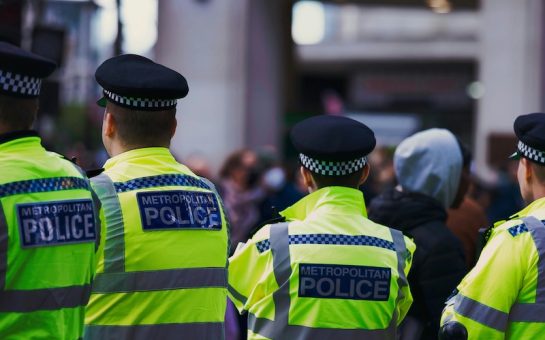
Photo: Krysztof Hepner on Unsplash



Join the discussion