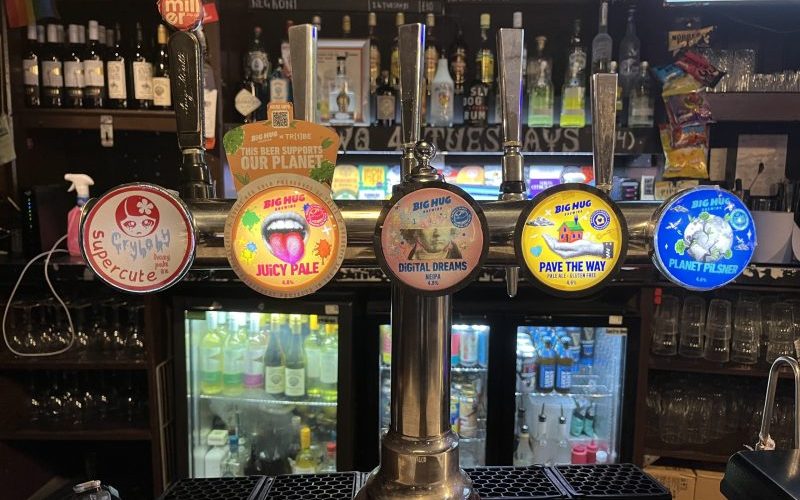
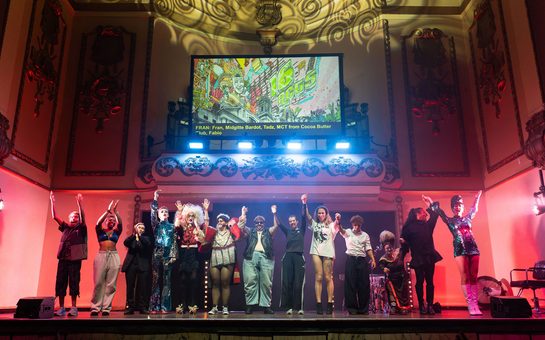
Last Friday, pub-goers across the UK had a drink on comedian Joe Lycett’s tab after he donated £100 each to 30 pubs.
During the final episode of his TV show, The Lycett Arms, the Celebrity Traitors star said: “I do wanna talk about pub closures, because it’s a serious problem up and down the UK.”
He then announced the 30 pubs which would receive £100, including The Old Ivy in Clerkenwell, The Miller in London Bridge, The Dodo in Hanwell, Mikkeller in Shoreditch, The Crown and Greyhound in Dulwich, and Signature Brew in Haggerston.
Lucy Do, owner of The Dodo, said: “It was probably our busiest Friday, and it was a real mix of completely new faces, long-lost patrons who we hadn’t seen in absolutely years, and regulars.
“We had to open the back garden to fit everybody – it was super busy and super successful.”
Lucy, 35, said one group came to the pub the following day for a drink and told her that they were going to all six London pubs mentioned on The Lycett Arms.
General manager of Mikkeller Shoreditch, Jonah Eli German, said the tab brought a different clientele than usual, including people new to the area.
Jonah, 26, said: “People had to be in the know about it to use it, which was quite fun.”
Landlady of The Old Ivy, Kate Davidson, said: “So many people came for the thrill of a free pint.”

Ross Johnson, general manager of The Miller, said: “It did bring a lot more footfall for that evening.
“The majority of people stuck around and stayed for a bit afterwards.”

Jonah said: “Joe Lycett showed the reality of what it’s like to run a pub now – it’s good that it prompted more people to think about it.
Lucy, who has been running The Dodo for almost a decade, said: “It’s less fun to run a pub now, because you’re constantly looking at margins and spreadsheets and trying to manage costs.”
She stated that energy costs, business rates, national insurance contributions, and VAT on alcohol and glass bottles all contributed to rising costs.
Lucy said: “We’ve been squeezed to a position where I can no longer absorb any costs.”
Kate, 44, said: “To look at our pub, it would look like it’s a busy, thriving, wonderful hub – and it is, but no-one’s making any money.
“It’s busy all the time, it should be profitable.”

Ross, 38, noted independent pubs were being hit the hardest by rising costs and smaller profit margins, and that one of the pubs which had been around for as long as he could remember had been forced to close.
He said: “I do think there’s a worry about independent pub culture – they seem to be the ones that are hit.
“We’re losing a little bit of the individuality with that – it’s just a kind of bland, sameness across different pubs.”

The high cost of living has affected not only profit, but also drinking culture across the UK – a change which those in the industry have noticed.
Lucy said: “You’re constantly trying to give people a reason to come in.
“Gone are the days when you could just open up a venue and people would just fall through the door.”
Lucy stated that in 2019, regulars came in around three times a week, but that’s dropped to once a week “if we’re lucky”.
She said: “The pattern of behaviour has changed dramatically and I think that’s largely due to the cost of living.”
Kate agreed – she noted that before COVID, a football match could attract customers who stayed all day, and a crowded bar only added to the atmosphere.
Now, if a pub looks busy, people simply find somewhere else.

Ross said: “Drinking culture changed quite a lot post-COVID. I think the younger generation are less likely to go out and have a drink – not across the board, but I do find that it seems to be the case that people aren’t going out to the pub so much.
“I think people are a lot more health-conscious these days, and maybe the younger generation are happier to socialise at home.”

Jonah noted the high price of a pint. “Most places in London, you’re paying upwards of £6.50 for a pint now – it’s not like when I was at uni and you could go out and go to the pub and spend 15 quid and that would be your night,” he said.
He emphasised how the scene of pub culture had changed: “Right now, with the decrease in desire to go out and drink, pubs have to diversify their portfolio to get people in.
“It’s not enough anymore to just be a pub that serves good beer.”

Kate said: “We’re constantly trying to think of new ways to get people in.
“We do live tunes every Friday, we’ve got a band on every Saturday, we’ve got music on Sunday, we do a pub quiz on Tuesday, we do a bookshow in the summer even though we don’t have a garden – we’re always trying to think, ‘What can we do?’”


Despite their fears around high costs and fewer customers, those in the industry have stayed optimistic and resolute in their commitment to British pub culture.
Jonah said: “There’s obviously a lot of difficulties facing pubs right now but there does seem to be a healthy amount of energy and vibe in the scene.”
Lucy said: “Even if you choose not to drink, a pub is still a space where people can belong, be included and have that sense of community. They’re important spaces and they’re part of British heritage, and I hope they never go away.”
Featured image credit: Lucy Pollock
Join the discussion