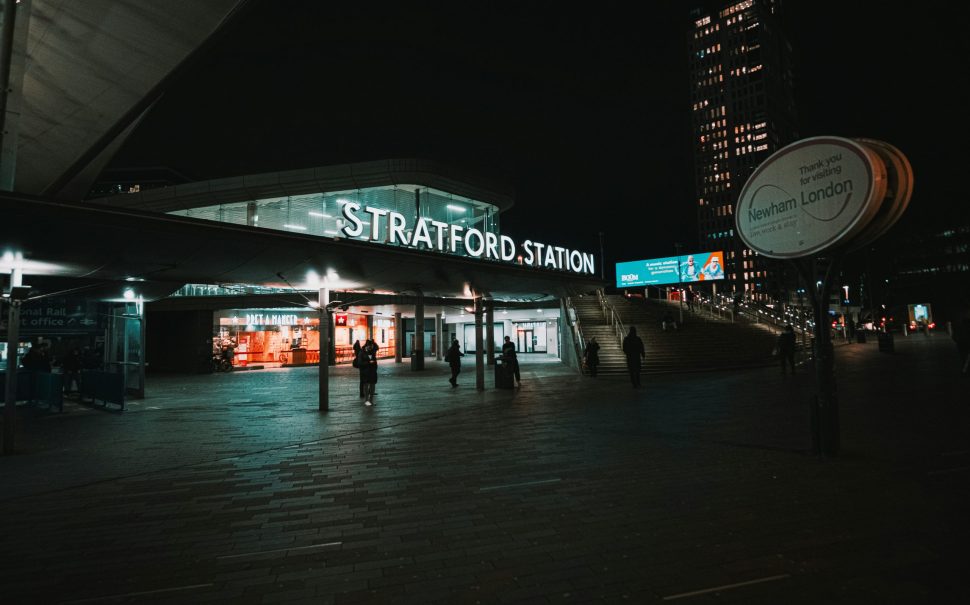
Newham has seen the biggest drop in population in London, almost double that any other borough, new ONS data shows.
Nearly 50,000 people moved out of Newham in the year to June 2025, resulting in a population decrease of 16,325, according to the Office for National Statistics data.
Residents have attributed this to a high cost of living, issues with safety and a loss of community.
Laura Stagg, who has lived in Newham for 22 years and raised both her children there, said: “We’ll stay as long as we can but it’s affordability.
“Fairer rents are needed.”
She added that her family live in a small two-bedroom property where she sleeps in the living room, and that renting a three-bedroom home costs around £2,300 a month.
Data from the Official for National Statistics shows this to be true.
Newham’s outflow per capita is the seventh highest in the 32 London boroughs, but its inflow is middling, sitting well below Lambeth and Camden.
It doesn’t have unusually high departures per resident, so the reason for the population decrease is because it attracts fewer people from elsewhere in the UK than comparable inner boroughs.
The average age of the people leaving the Borough is around the time where people consider starting a family, with those aged 25-44 accounting for more than half of the population decline.
However, there isn’t a shortage of demand for housing in Newham.
Resident, Umm Aisha, lives in Forest Gate, an area immediately east of Stratford.
She said: “I have lived in Forest Gate all my life and I’m in my 50’s now. I’ve noticed a big change over the years. Forest Gate station is busier than ever, my side of Forest Gate is totally gentrified.”
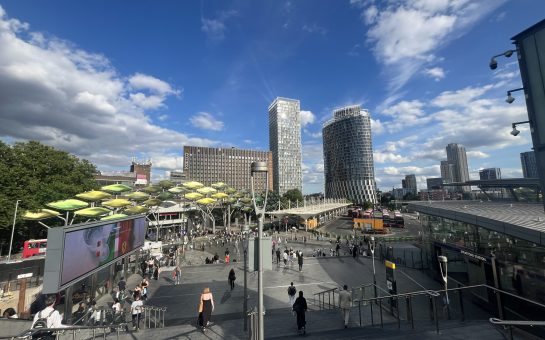
Another Newham resident, Nick Escow, added: “Stratford has been regenerated as far as it can go. But there are barely any pubs remaining and there doesn’t seem to be much effort to replace them with some form of community hub.”
Escow isn’t the only one who feels as though high street decline and a lack of activities for residents is a factor into the loss.
Phoenix Debola said: “This trend sadly reflects a lot of frustration because some parts of Newham clearly need a lot more attention.
“At the same time, there are tens of thousands of people on the housing waiting list, so there certainly isn’t a shortage of people who want to live here.”
But, Debola said neighbourhoods including Upton Park and East Ham needed greater investment.
Figures from Newham Council show that 41,223 households were on the borough’s housing waiting list at 31 March 2025, highlighting the contrast between demand for housing and the number of residents moving away.
The borough’s changing demographics are also raising questions about the future of local services, with one consequence being the closure of a primary school.
Calverton Primary School closed on 31 August after the council cited falling pupil numbers and financial pressures.
Its statutory notice recorded 207 pupils on roll in May 2025, against a published admission number of 420 – in effect, they were operating at around 50% capacity.
The council has attributed falling demand for primary school places partly to lower birth rates across Newham and London and the migration figures alone do not establish that people moving away caused the school’s closure.
Professor Tony Travers, of the London School of Economics, suggested changes in international migration could also be contributing to the wider population picture.
He said London’s population was shaped by births and deaths, movement between London and the rest of the UK, and migration from the rest of the world.
A recent fall in net international migration, following the so-called “Boriswave”, may also have affected Newham, he added.
The term “Boriswave” refers to a surge in immigration to the UK between 2021 and 2023, following changes to the post-Brexit visa system introduced under Boris Johnson.
British social geographer at the University of Oxford, Danny Dorling, said: “As yet there is no sign of the overall fallen births in recent years in the UK ending, and it is a part of a general decline that has been on-going since the 1960s.
“There are also fewer young people being born elsewhere in the world and so numbers of potential immigrants are falling.
“What we see now in one borough in London may well become more widespread in future.”
Another issue raised by residents of the borough is safety.
El Truchan has lived in Tower Hamlets and Newham for the last 20 years, and said: “It’s not safe, it’s not clean, its not nice apart from the immediate Canary Wharf itself.”
Teri Hicks has lived in Newham for all of her life, and said: “If I could get an exchange out of here I’d go tomorrow.”
Nearly a third of all crime in the borough is theft, at 31%, according to other ONS data.
Last month, Newham was the east London borough with the most reported crime, at 3,503 according to the same data.
Newham also logged 824 knife-related offences between September 2025 and August 2026, the most of any London borough, out of 13,649 across the city, according to monthly data from the Met Police.
A spokesperson for Newham Council said: “The council continues to use ONS mid-year population estimates alongside a wide range of national and local data, intelligence, resident engagement, and insight from voluntary, community, faith and social enterprise organisations to understand the needs of residents and service users to inform service planning.”
Featured image credit: Samuel Regan Asante via Unsplash

Join the discussion