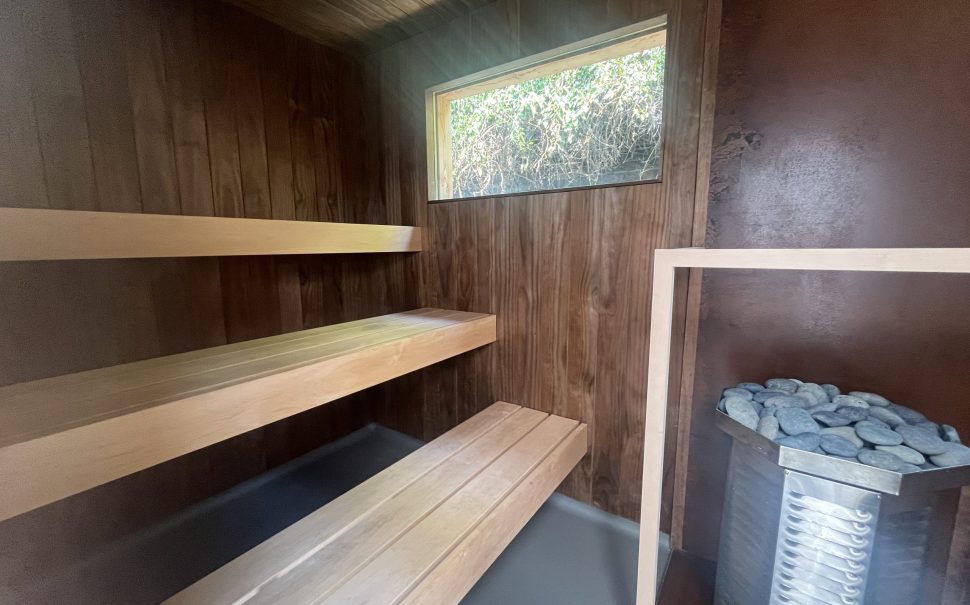
A new biogas sauna powered by local food waste has been built at R-Urban Poplar, believed to be the UK’s – and possibly the world’s – first.
Who’s behind it?
Sitting within R-Urban Poplar, a community garden and circular economy project, the sauna was constructed by non-profit Community Sauna Baths.
It will be fuelled by ‘bio-resources’ from around 200 local homes that would likely otherwise be buried in landfill or incinerated.
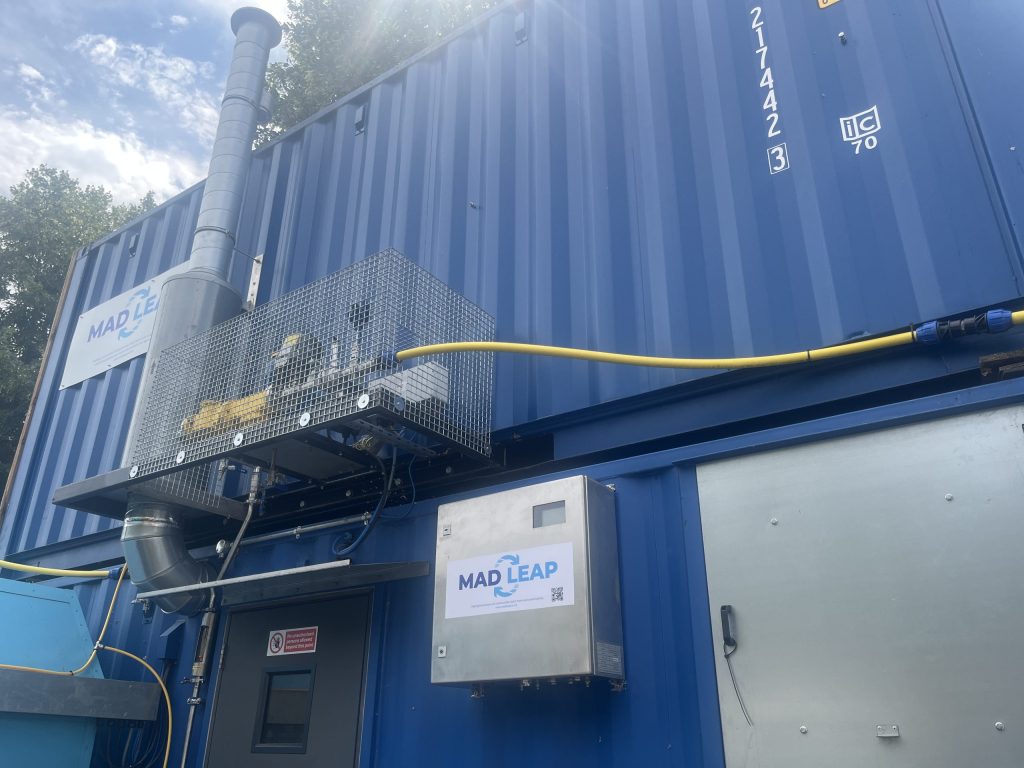
The anaerobic digester that makes the operation possible – capable of processing around 100kg of food waste a day – was created by sustainability and circular waste company Mad Leap, led by Rokiah Yaman and Guy Blanch.
“What we’re trying to do is make the technology at a scale where it can benefit local people and help them to understand the value of our bio-resources,” Rokiah tells me.
“Over a number of years, we’ve developed a circular model, combining anaerobic digestion with food growing.
“This is the final piece of the puzzle that helps the business model: having a sauna with the digester is really great and is well matched to the size of system that we produce.”
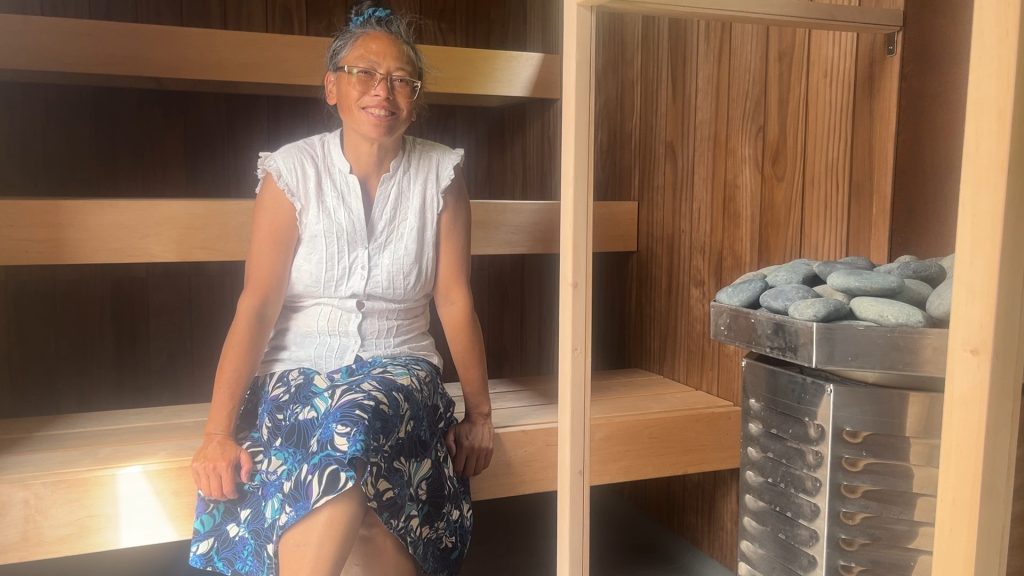
Rokiah is excited about the human upside too: “There will be some nice health and wellbeing benefits from the gas, [rather than] just capturing it.”
The sauna
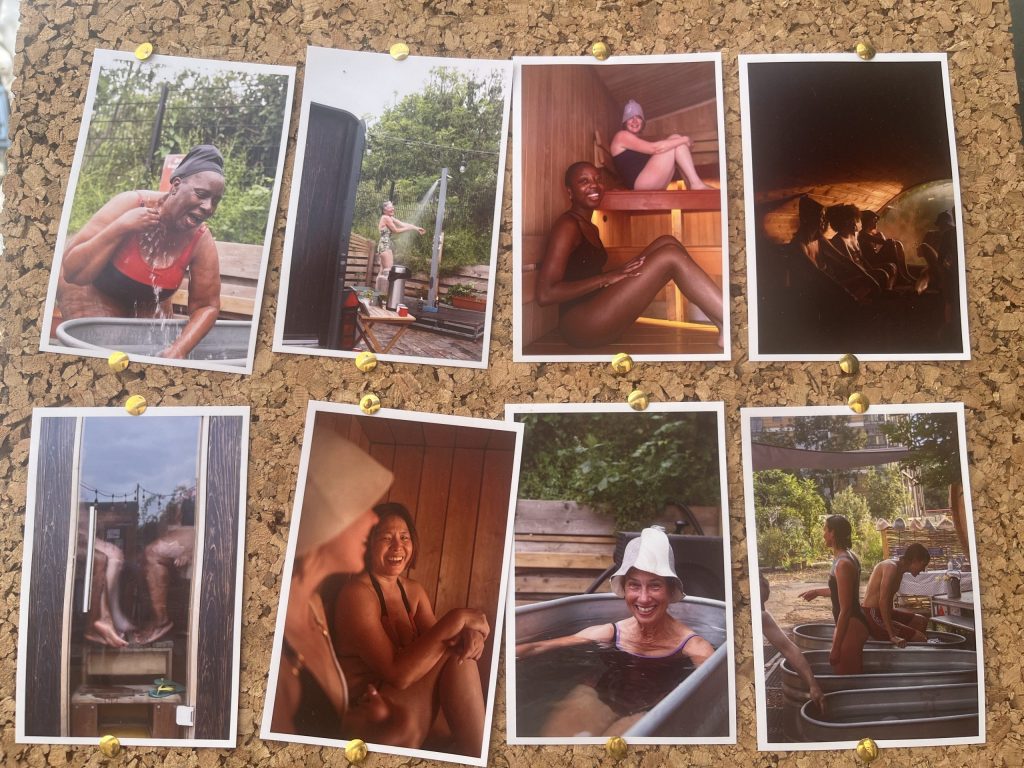
Community Sauna Baths (CSB) has rapidly expanded since it began in a Hackney Wick car park in 2021: it now consists of five sites, with more in the pipeline.
CSB currently heats its saunas using either electricity or wood – itself a by-product from the Lithuanian furniture-making industry, kiln-dried using waste sawdust and bark – but the sauna at R-Urban is their first to be run from biogas.
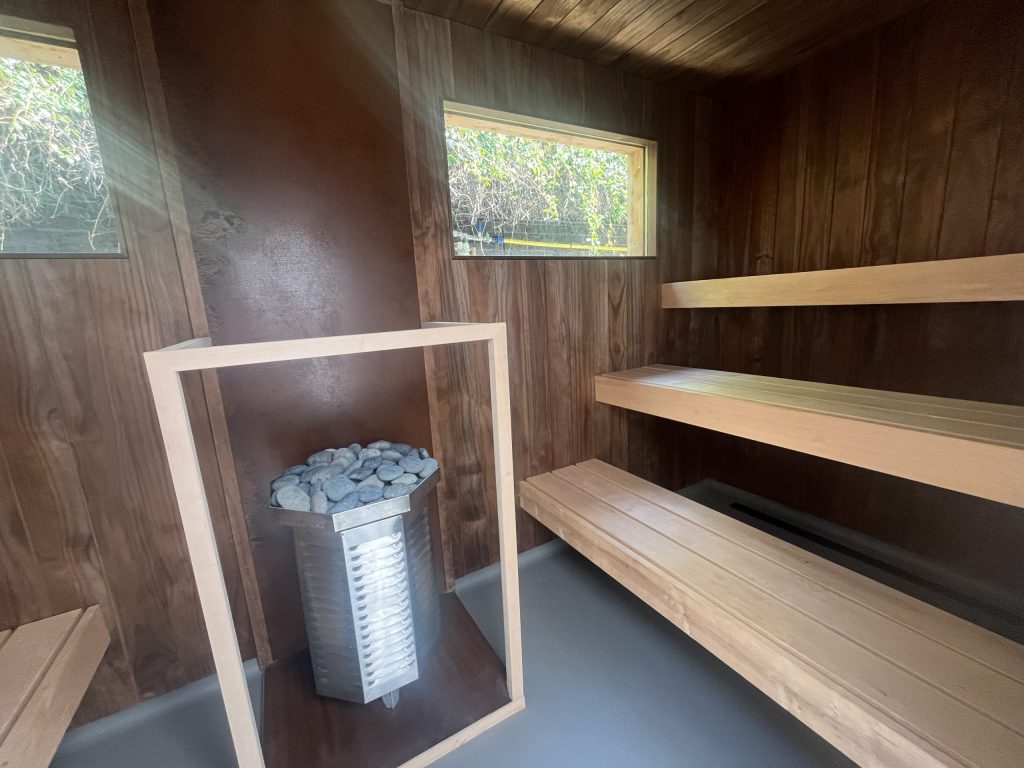
“We’re massively viewing this as a prototype for more circular energy and water use,” co-founder Charlie Duckworth tells me.
“I’ve been at a bunch of [sauna] conferences this year and there’s so much hype and growth and excitement, but hardly any conversation around efficiency and sustainability.”
“The sauna is not yet operationally or customer experience ready but it does heat the room and there is löyly that can be poured on the stones.
“The key thing here was to test the biogas. And we’ve demonstrated that it can be done.”
Charlie says they are looking for more funding and partners – ‘people who can help take this to the next level’.
He thinks this is something that can be built in every urban setting where there is a high volume of food waste:
“It’s a really resilient way to continue to provide health, wellbeing and leisure facilities as we enter a bit of a climate catastrophe.”
The design
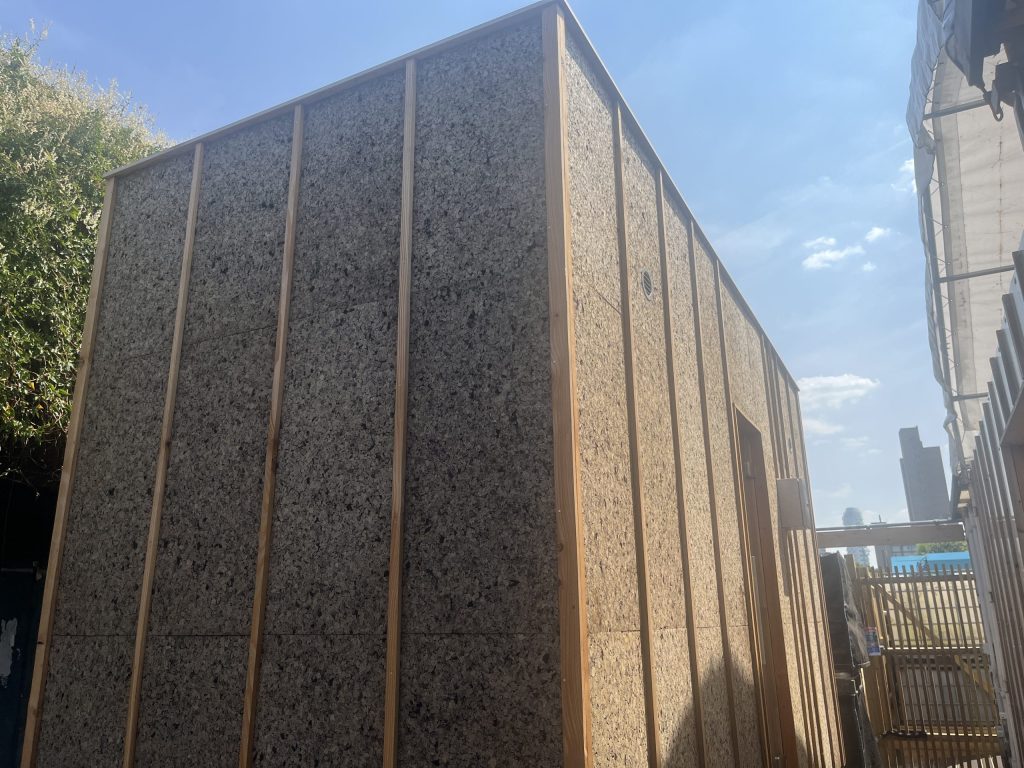
Designed and built by Elspeth Parsons and Billy from Bower Studios, the sauna incorporates sustainability through its materials and construction methods – something CSB is keen to develop.
Featuring smoked cork (a by-product of the cork stopper industry) as insulation, and reclaimed marmoleum floors, Elspeth described the project as ‘a labour of love’, saying it has ‘felt like a real R&D playground’.
“When you set out on a journey and you don’t know where it’s going to end up, that’s the spirit of it,” she says.
“We approached it perhaps more like an art object than a traditional sauna. There’s still quite a lot to figure out.”
How does it work?
Food waste is collected from nearby homes, sorted to remove anything that isn’t food, then shredded.
“This part of the process is like chewing,” Rokiah explains. “It’s like a whole digestion process, from beginning to end.”
The shredded waste is mixed into a pulp, then pasteurised — heated to 70°C for just over an hour to kill pathogens like E. coli and salmonella.
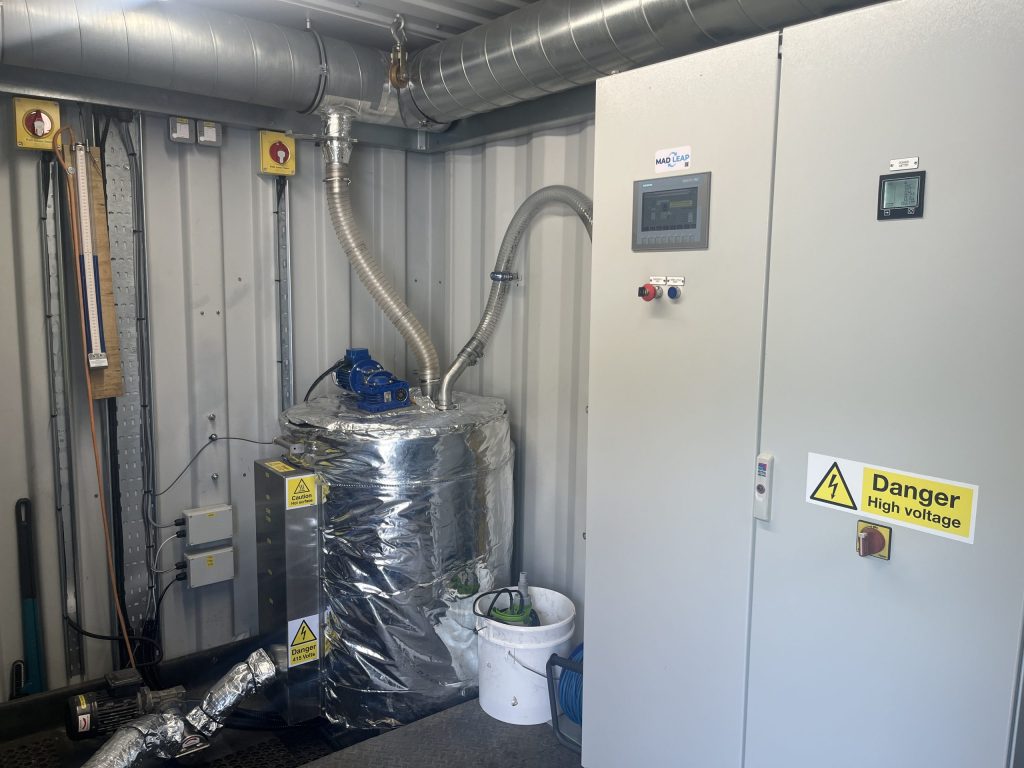
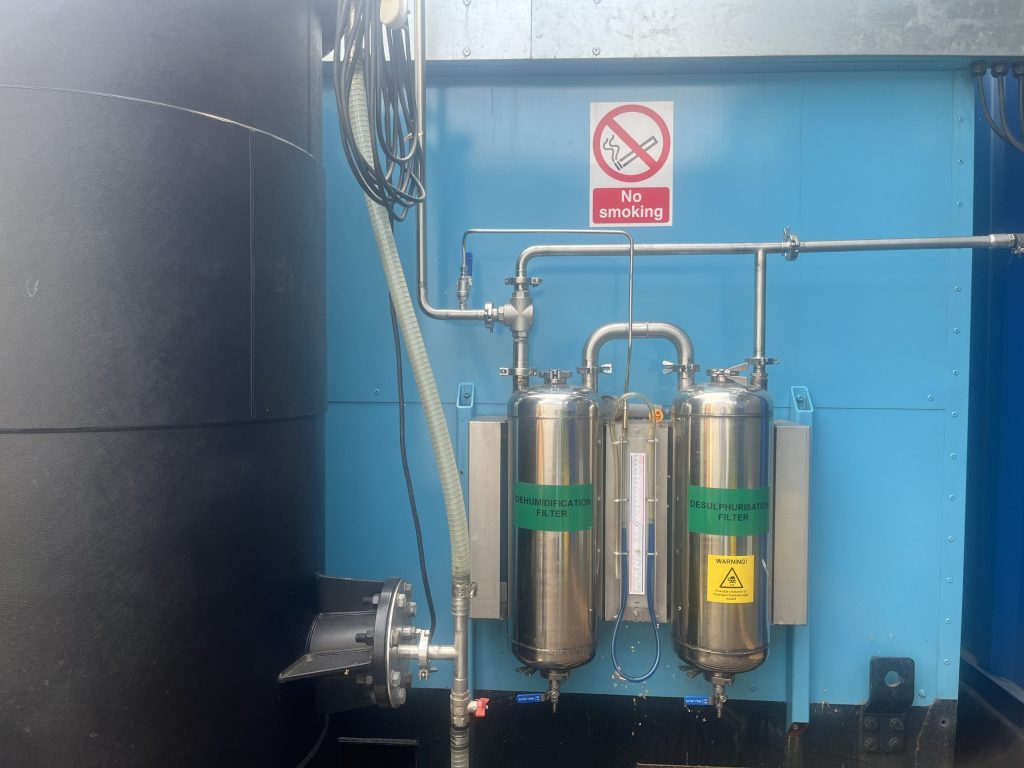
From there it’s pumped into the main digester tank, where it’s gently mixed while microbes break it down and produce gas, which is captured and stored.
“Every single part of the food waste is captured, in either gas or liquid bio-fertiliser,” Rokiah says.
“It’s effectively like a cow,” Cameron Bray, of R-Urban, grins.
“It’s composting – when you compost, it releases gases into the air, and you can actually harness those if you enclose it.
“This process is much more wet, a more stomach-like environment: you get liquid fertiliser out of it, which you can use for hydroponic growing to generate income, and there’s also gas, which you can use to power a sauna.”
R-Urban Poplar
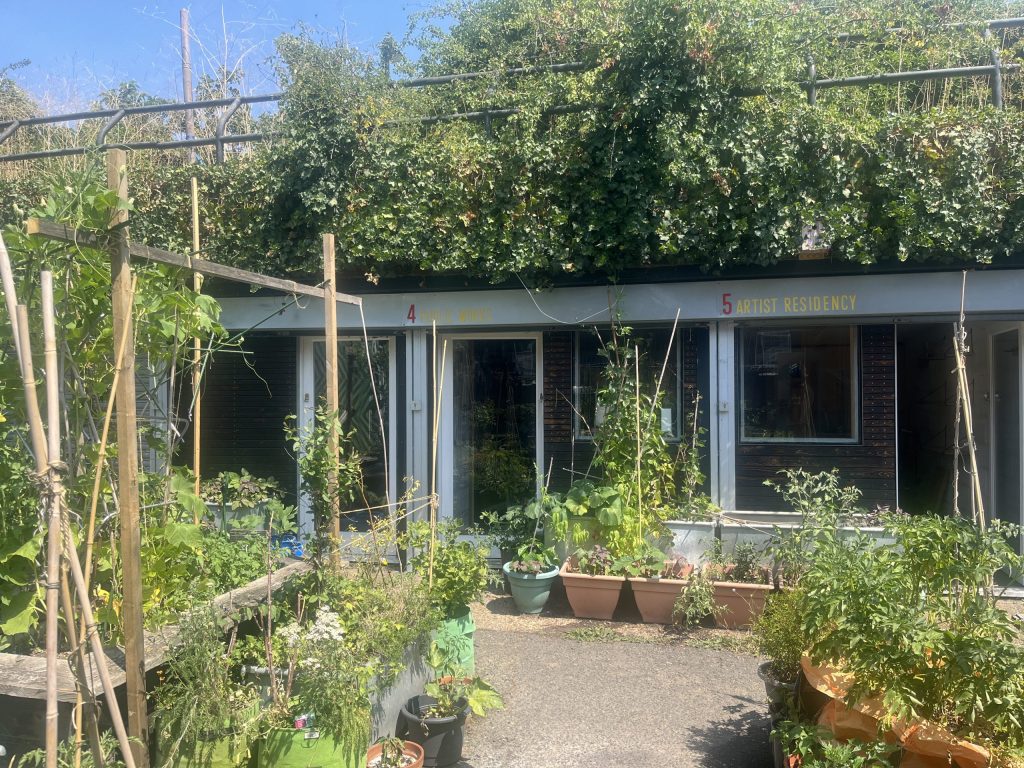
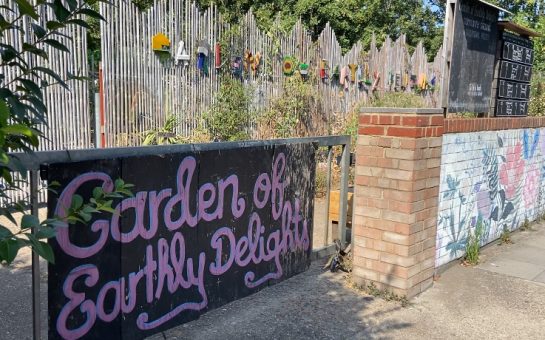
R-Urban Poplar, tucked away by the A12, has been going since 2017 when housing association Poplar HARCA invited the group to turn their disused car park into community allotments, workspaces, and habitats for wildlife.
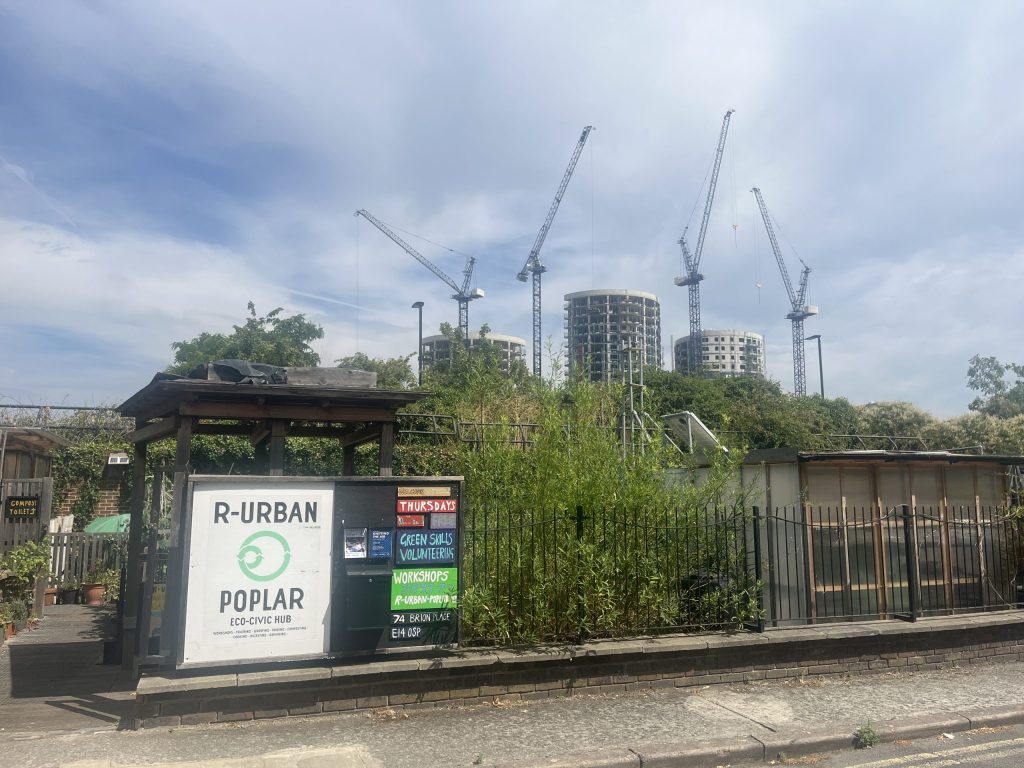
It has since grown into a civic space hosting food growing, foraging and low-cost living workshops, skill-sharing and artist residencies.
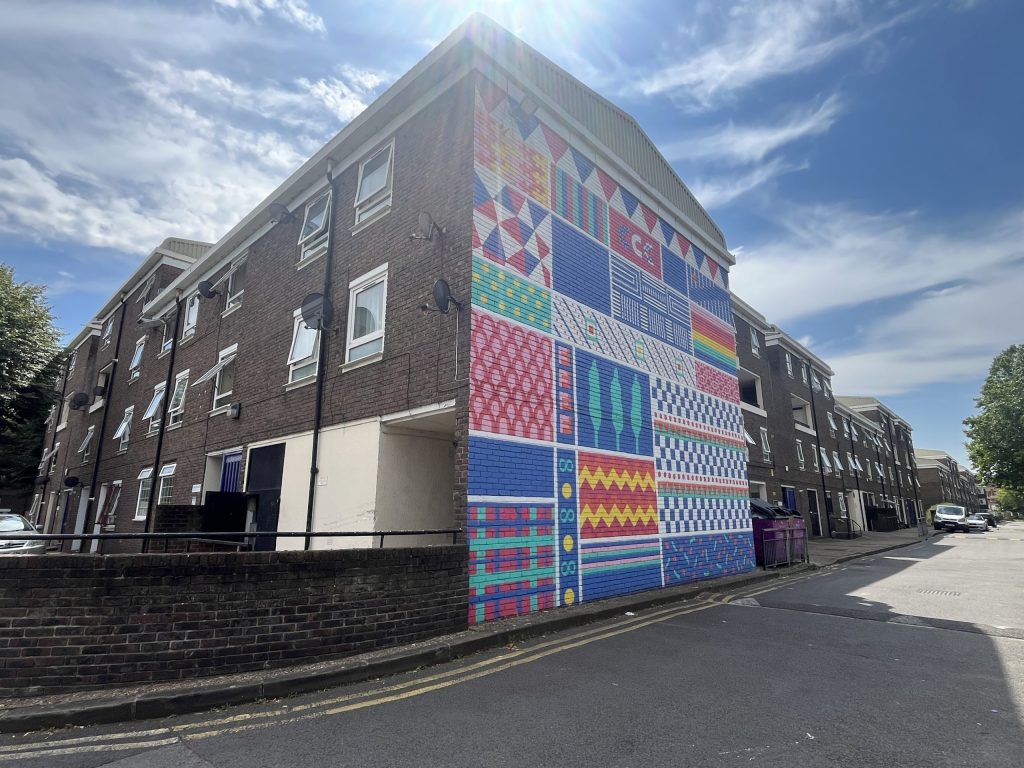
Cameron tells me their community is ‘a mix’: “For some people this is their local spot and others come from all over who are interested in learning the weird and wonderful stuff that we also like to learn.”
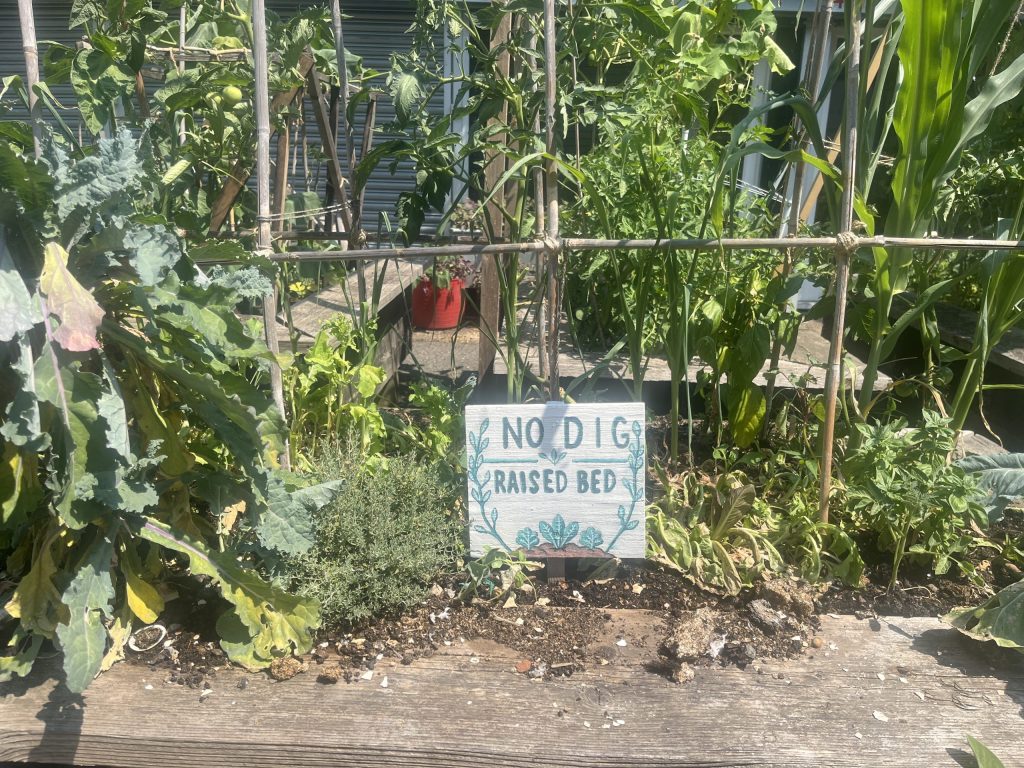
R-Urban are hoping to expand the site and potentially open a kitchen (also powered by biogas) to cater for sauna-goers and other users of the space.
The project was co-initiated by Public Works, a not-for-profit working across critical design, architecture, art, and ecology, whose projects include designing community gardens, playgrounds and city farms.
R-Urban also consists of a number of partners working across design and social and environmental justice, weaving together technical know-how and community building.
Circular economy solutions
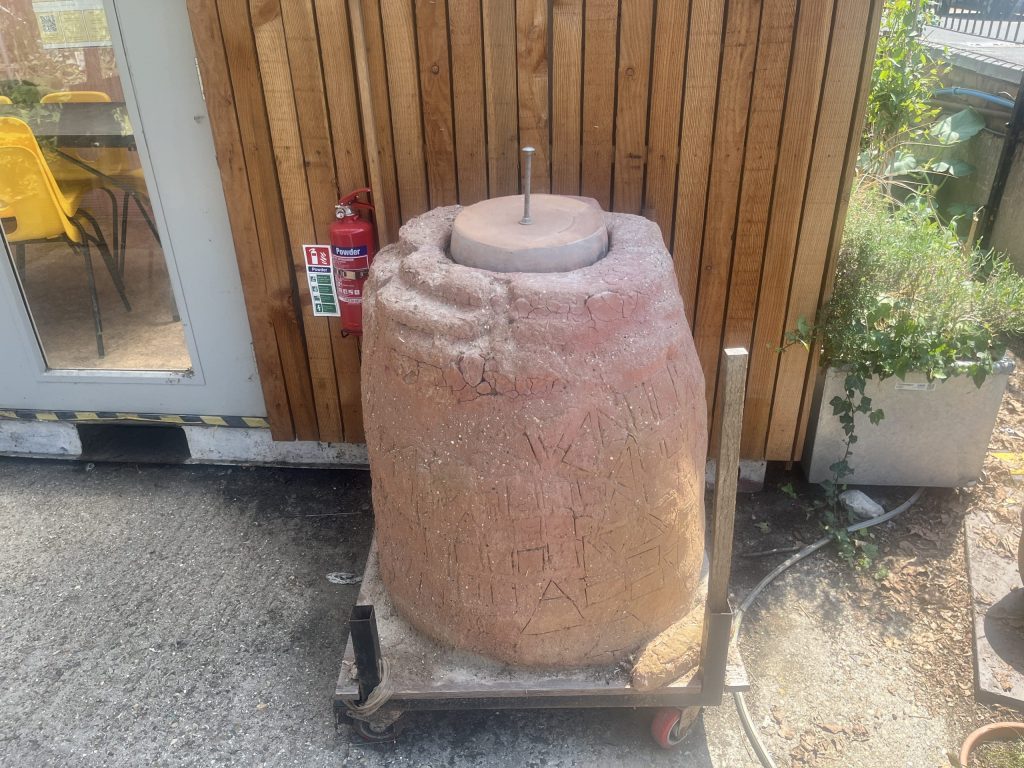
R-Urban has developed into a testing ground for circular economy projects, such as a mushroom farm and a clay naan oven called a tandoor built in collaboration with local residents from the nearby Teviot Estate.
“Tandoori cooking is a big part of South Asian culinary culture and our neighbourhood is largely Bangladeshi diaspora,” Cameron tells me.
The group also built six clay ovens that feature human hair (from sustainability artists HairCycle) mixed into the cob for its ‘high tensile strength’.
Cameron says they create things they’re ‘really nerdy about’ but that the limitations of the site mean they are sometimes forced to come up with solutions.
One such challenge is the lack of a foul drain on site.
“We also use [hair] in our grey water system to trap grease. It works amazingly well,” he says.
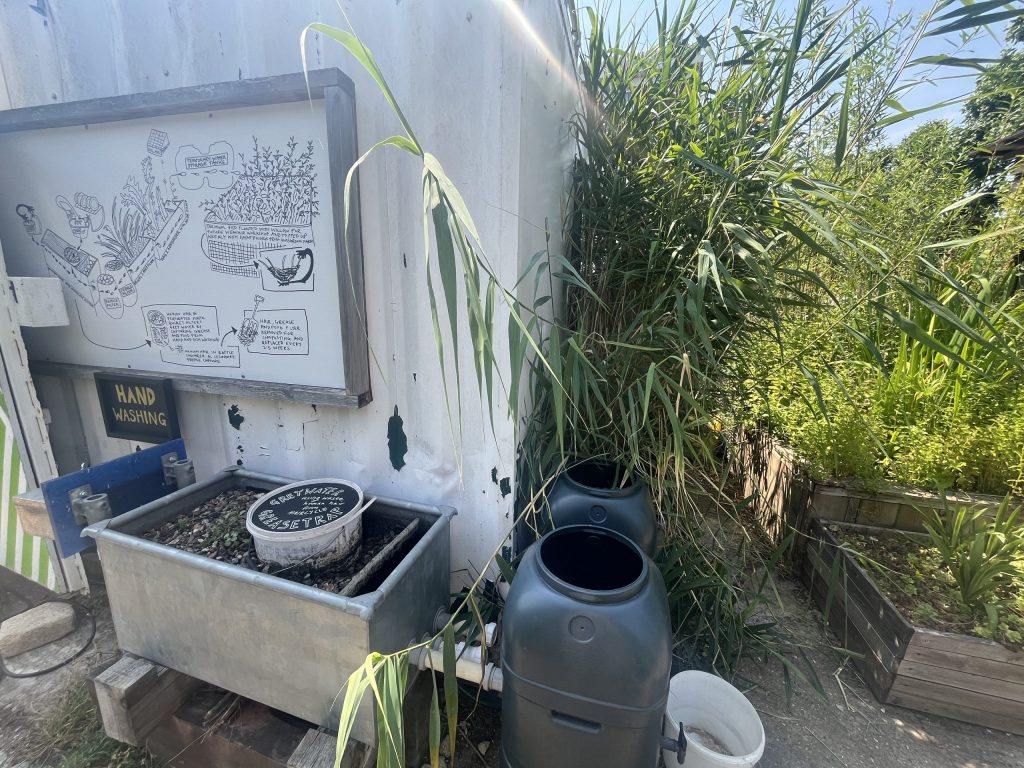
The system features terracotta balls – ‘a natural filter used all over the world’ – as well as pumice and pebble filters, and gravel and reed beds, with bacteria in their root systems that break down waste.
A willow bed and pond are then irrigated by the processed washing up water.
Rokiah tells me that an upscaled nature-based system will be built to process waste water from the biogas sauna: rather than going down a drain, it will be ‘polished’ and used in a hydroponic system, supporting food growing and raised beds, and engaging local people in the process.
The bigger picture
Anaerobic digesters (AD) are not new: there are around 750 council, commercial and agricultural AD plants operating across the UK, however Germany has far more: nearly 10,000.
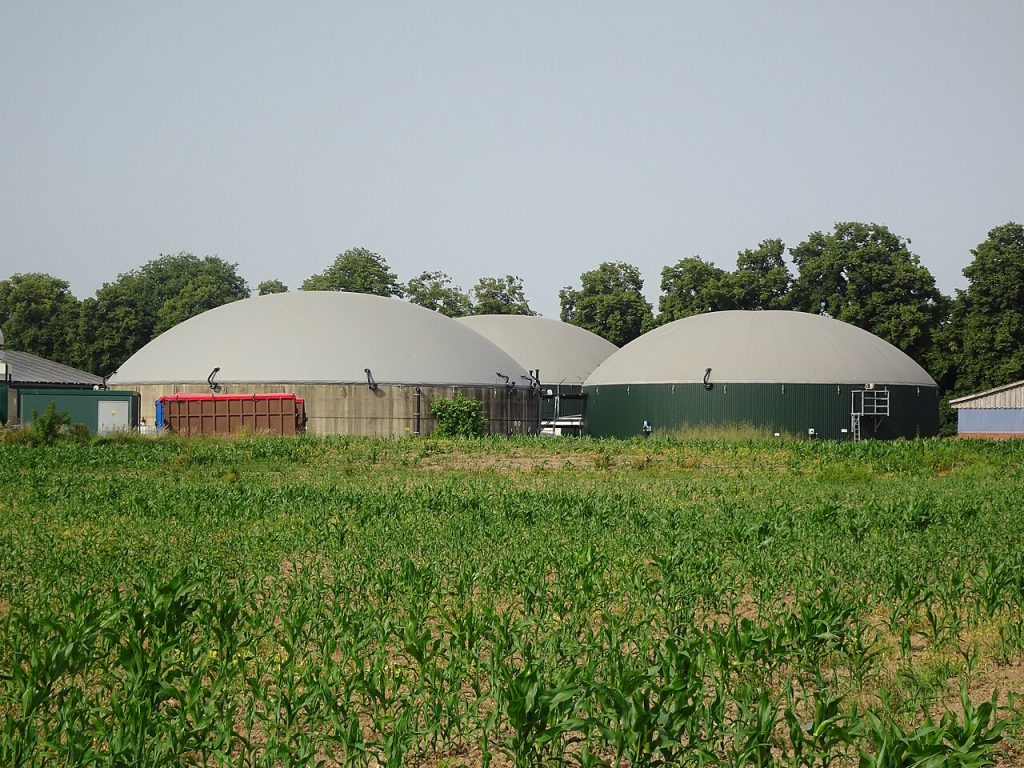
Last week, a new briefing from the Parliamentary Office of Science and Technology called for a scaling up of AD production roughly tenfold by 2050 to meet future demand for biogas (technically a mixture of methane and carbon dioxide).
Methane produced via food waste in landfill sites contributes around a third of total UK methane emissions, and the UK produces 10.2 million tonnes of food waste annually.
New legislation
New legislation, which came into effect in March, means that food waste now has to be separated from landfill.
Cameron tells me that in Tower Hamlets there’s a bit of flexibility: despite having the lowest food waste recycling rate nationally, they have around a year’s grace to implement household food waste collection due to having the most flats in the country.
“High-rise living and rapid housing growth make recycling structurally challenging”, the council told the BBC.
“The issue with flats is that it’s a fire hazard to put it in the stair case, so you have to have it at street level,” Cameron explains.
“But there’s also loads of pollution linked to the transportation of food waste, it has a really negative impact on the local environment in the places it’s processed, and it’s done at this crazy industrial scale.
“Actually there are loads of benefits to processing it at the neighbourhood scale: we’re able to use it to grow vegetables, to make compost, and to heat a sauna.”
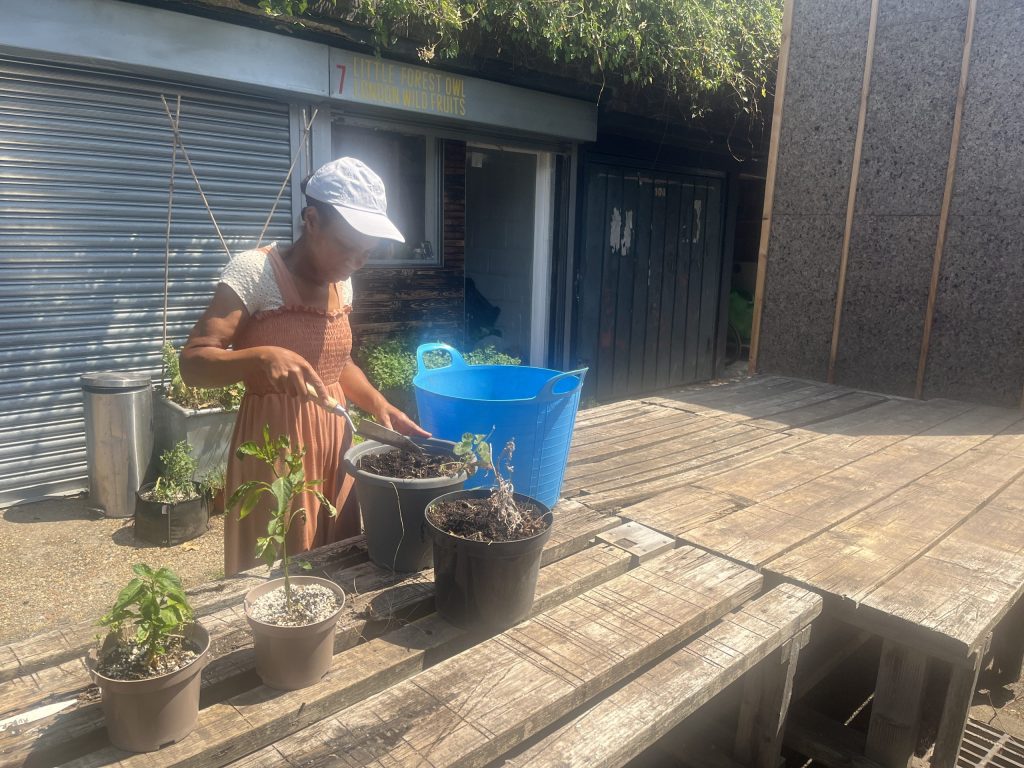
R-Urban, Mad Leap and CSB’s sauna is expected to open to the public later in the year.
The author works in a freelance capacity for CSB doing maintenance but has had no involvement in this site or any operational development.
Featured image credit: Ivy Burnett
Join the discussion