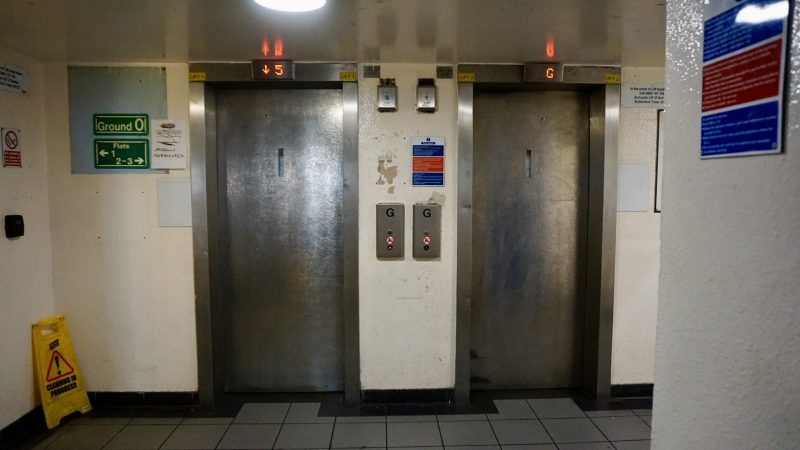
The number of incidents in which firefighters are rescuing people trapped in lifts is rising in London.
Data released by London Fire Brigade (LFB) reveals that firefighters had to rescue people from lifts more than 7,000 times in the past 12 months – a 15% increase in two years.
Rutherford Tower, managed by Ealing Council, has had 16 LFB callouts to rescue people shut in lifts in the last 12 months — the most to a single building in London during this period.
A resident who has been trapped in Rutherford Tower’s lifts twice said: “It gets really warm in there, and it’s very claustrophobic.
“I hardly hear anyone when I get stuck.”
He said that had followed the instructions given by pressing the help button, but struggled to get through to the lift operator.
He had been forced to call the fire brigade and waited between 45 minutes and an hour for them to arrive and help him out of the lift.
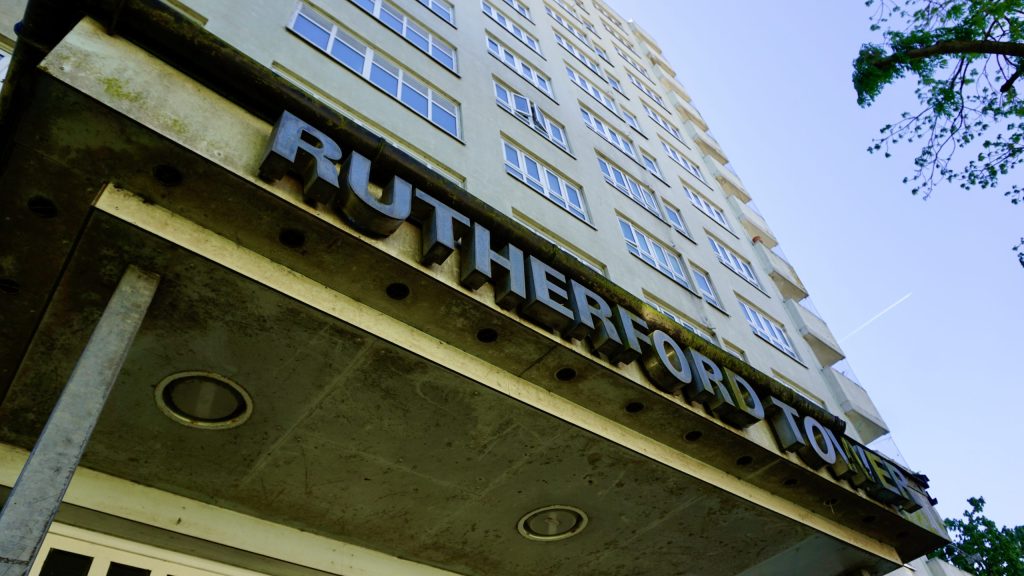
Another resident with a disability who lives on the eighth floor said: “Everyone was calling the council, it was terrible.”
He said that the lifts were often broken or being repaired throughout 2025, but have not caused him any problems since the operator changed three months ago.
He claims that the council told him to use the stairs to reach the second lift (which serves odd floors), even though he struggles to walk without a roller, and said that navigating the stairs and using the bannisters was ‘very hard’.
“That was completely mad,” he added.
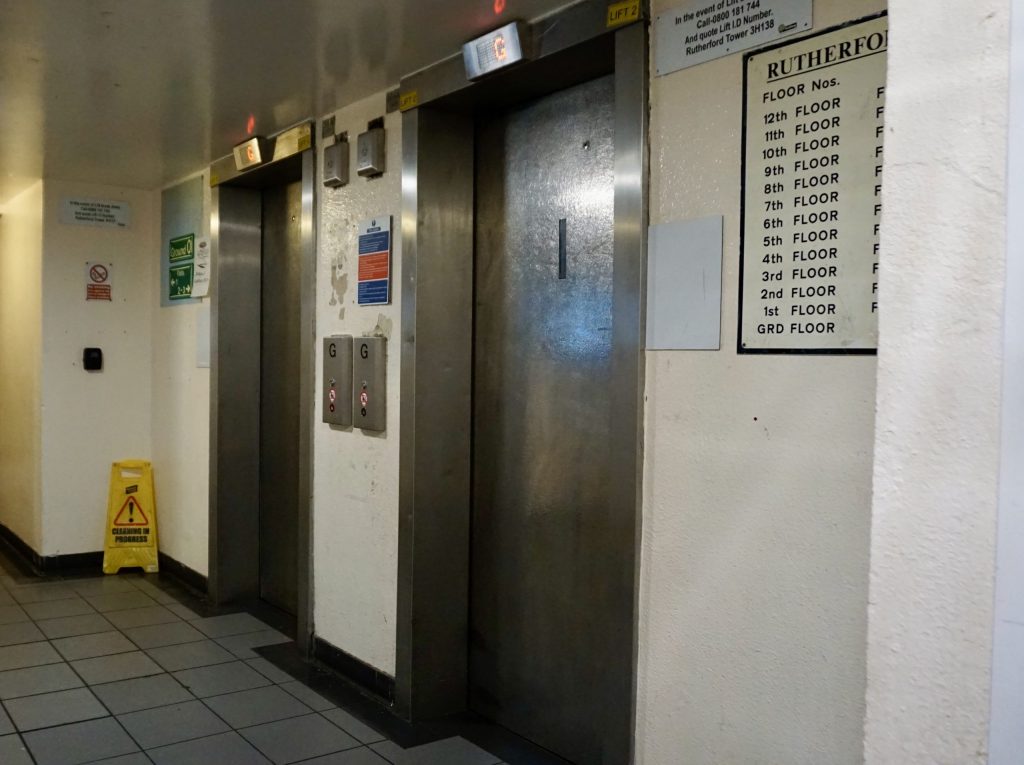
A resident living on the 11th floor said: “We didn’t know how long they’d be out of service for. We could’ve been waiting for days, weeks or months.”
Ealing Council has been approached for comment.
Shut-in-lifts incidents attended by the LFB have cost the taxpayer £3.5 million in the last year, with about one third being ‘non-emergency shut-in-lift incidents’ where the person trapped could not reach help from the building or lift owner.
An LFB spokesperson said: “When attempts at reaching other help have failed, we do encourage calling 999 – Control Officers can provide advice, and if need be, mobilise firefighters.”
The Brigade can charge building and lift owners if they attend three or more non-emergency incidents at the same building within 12 months.
This scheme was introduced in 2009 in an attempt to reduce the number of unnecessary incidents that firefighters attend and to recover the costs of these callouts.
The Brigade confirmed that building and lift owners are responsible for proper maintenance, and are required to provide a 24/7 lift release service and a number to call to raise the alarm.
An LFB spokesperson added: “Our Borough Teams are in regular contact with local authorities, site owners, building owners and other responsible persons to mitigate and reduce non-emergency callouts to people shut in lifts and we prioritise sites with larger numbers of callouts.”
The remaining two thirds of callouts, approximately 2,300, were emergencies when someone was in immediate medical danger in lifts.
In the last 12-months, more than 7,000 firefighter hours were spent rescuing people from lifts in London, with 95 incidents requiring two or more fire engines.
Data from the last three years reveals that three quarters of incidents were in residential flats, with the remainder being mostly in hotels and offices.
The 19,780 incidents in the dataset occurred in a wide range of property types, including football stadiums, museums and even a motor yacht.
Westminster, Tower Hamlets and Hackney were the boroughs which received the most callouts, with Richmond-upon-Thames receiving the fewest.
Firefighters also performed 505 rescues across the 380 lifts operated by Transport for London (TFL).
Responding to a Freedom of Information request about out-of-service lifts, TFL said: “Our lifts receive a routine maintenance check every two weeks, a full MOT every six months, and a partial refurbishment every five years. Lifts are due to be fully replaced every 10 to 20 years, depending on the type of machine.”
June 2025 was the month with the highest number of incidents with 716 recorded, followed closely by July that year with 714.
In March, The Times reported that elevator company KONE has monitored a year-on-year increase in the use of lifts across London in the last five years, which suggests that more workers are returning to in-person office environments after the Covid pandemic.
An increase in the number of people using lifts could be behind the rising number of incidents attended by the LFB.



Join the discussion