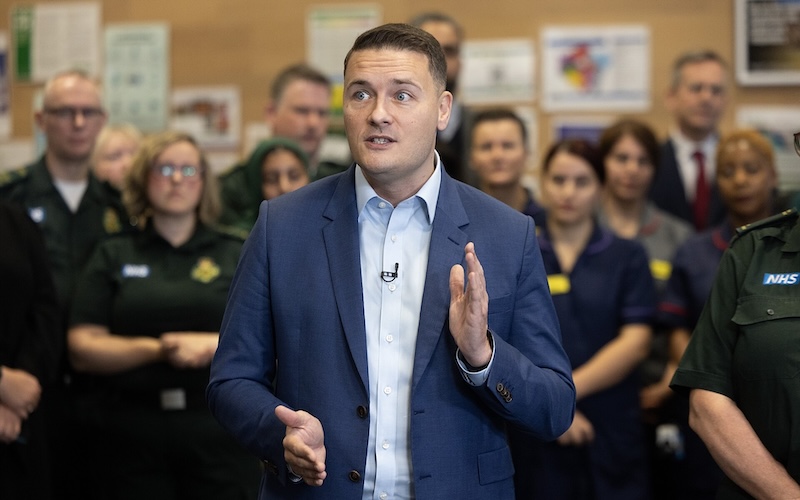
Wes Streeting, Health Secretary and MP for Ilford North, earns a salary almost four times greater than the median resident in his constituency, according to data from the Office for National Statistics and UK Parliament.
With Streeting pulling in over £160,000 a year, compared to the median Ilford North resident’s £42,260, the disparity constitutes the largest such gap across all of Greater London.
If donations, gifts, and funded trips are included in Streeting’s income, the figure soars to more than £270,000, over six times the median constituent’s salary.
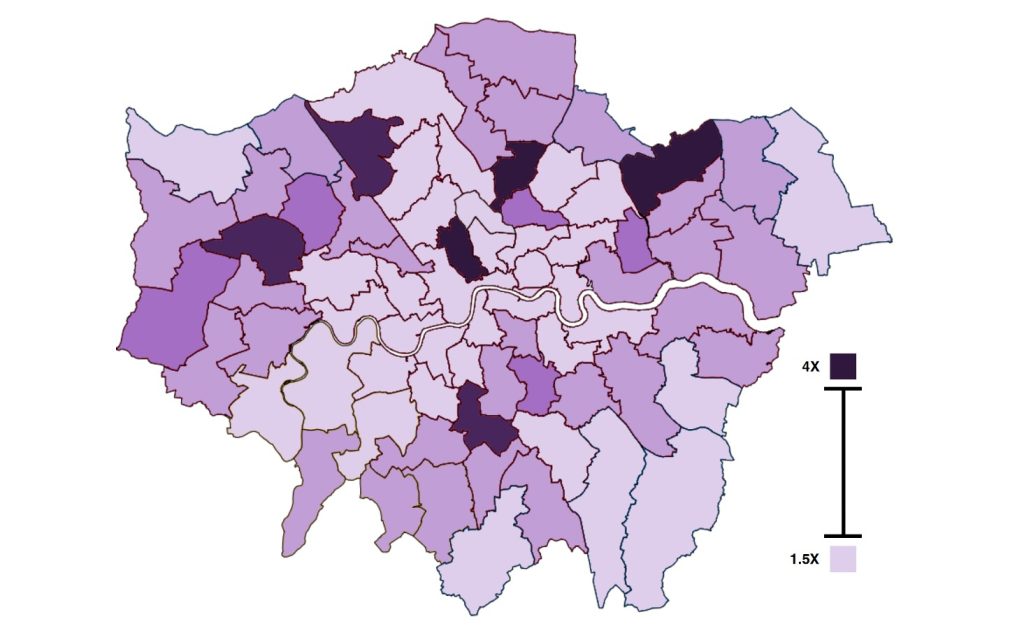
On the other end of the spectrum, Tulip Siddiq, MP for the high-earning Hampstead and Highgate, who claims only their basic MP salary with no extra employment, donations, gifts, or trips, earns just slightly above one and a half times that of her median constituent.
Lauren Riley, 24, a Highgate resident, said “That makes sense – the cost of living is really high here, so average earnings have to be high, but I really like Highgate, and I feel very lucky to be living here”.
Only marginally behind Streeting is David Lammy, MP for Tottenham, whose salary of £161,409 also nears four times the median salary of his constituents, £42,406.
By far the largest disparity in the UK, however, exists between Nigel Farage and his constituency of Clacton, where the former’s annual earnings of £1,111,380 dwarf the median Clacton salary by a factor of nearly 31.
Having been elected to the Essex seat, which sits in the bottom fifth of constituencies in terms of median earnings, Farage receives a salary from his role as MP, though this comprises only a very small part of his earnings, with the majority deriving from his work for GB News.
The other four politicians occupying the top five are all Conservative Party MPs, including previous Prime Minister Rishi Sunak and one-time Chancellor Jeremy Hunt.
Previously, the Labour Party stated that it would ban MPs from taking second jobs, but the proposal was dropped, not appearing in their election manifesto.
In July 2024, the Commons passed a weaker proposal which sought to close loopholes rather than to substantially alter the status quo.
Earlier this month, IPSA (Independent Parliamentary Standards Authority) released their “Supporting Democracy” report, announcing and explaining their plans for MP pay increases.
In the paper, IPSA stated that by the end of the current parliament, they believe MPs should receive a salary of around £110,000.
The report stated: “We believe MPs and their staff should be remunerated appropriately for the work they do, and receive the right level of support and funding to enable them to carry out their parliamentary duties.”
“For our pay decision for 2026-27, IPSA consulted citizens and experts directly and considered a range of metrics, including statistics on pay and reward in the public sector, our own core principles, and the wider economic context.”
According to a 2019 survey by KIS Finance, almost a third of the population believed that the MP salary (£77,379 at the time) was “not enough to encourage high performing individuals to consider a career in politics”.
The report observed that The Head of the Metropolitan Police, with a salary of £278,563, earns three and a half times the salary of an MP, while many head teachers earn more than £100,000 a year.
Meanwhile, however, a 2021 Ipsos poll discovered that most Britons disapprove of MPs holding second jobs, with 52% disapproving, and only 19% approving.
Among the older generations, the figures are even more stark, with only 10% of 55 to 75 year olds approving of MPs doing work outside their parliamentary responsibilities.
Ipsos Research Director Keiran Pedley said: “There is little public sympathy towards the notion of MPs holding additional jobs beyond that of being an MP”
“Most Britons think MPs shouldn’t have the time to do other work and they are concerned at the impact doing so might have on their independence as MPs.”
Wes Streeting, David Lammy, Nigel Farage, Rishi Sunak, Sir Geoffrey Cox, Sir Jeremy Hunt, and George Freeman were all reached out to for comment.
Cover photo credit: Simon Dawson / No 10 Downing Street, 2024, CC Attribution 2.0 Generic

Join the discussion