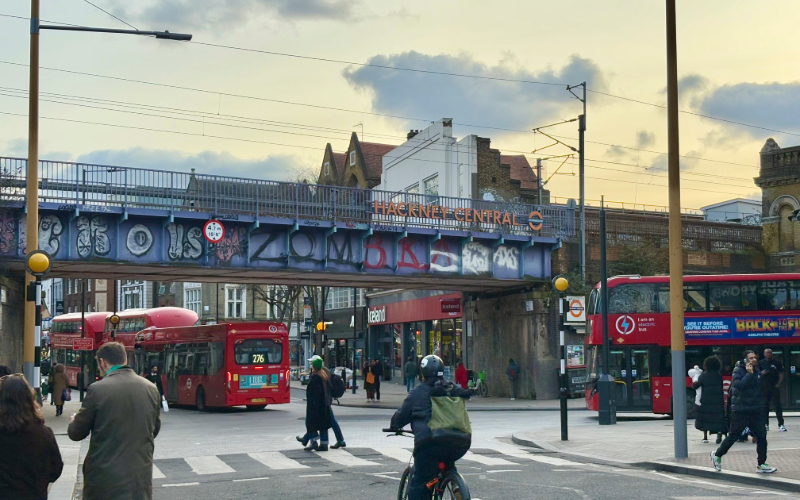
Hackney is widely seen as one of London’s creative hubs, known for its galleries, booming nightlife, and a variety of independent shops.
However, new data on microbusinesses suggests that the borough’s creative economy may not be as sustainable for traditional cultural businesses as its reputation implies.
There are nearly four thousand creative microbusinesses in Hackney with between one and four employees and an annual turnover exceeding £90,000, according to VAT and PAYE enterprise data.
However, despite Hackney’s artistic image, the largest share of these businesses fall within the technology and digital sectors, rather than fashion, music or arts-based industries.
The data highlights the boost to Hackney’s economy that freelancers, start-ups and small studios give, many of which operate on tight margins.
IT and Software alone contains more than a thousand enterprises making up more than a quarter of all recorded creative businesses in Hackney within the scope of the data.
Rising rents and living costs are making it increasingly difficult for smaller creative businesses to remain in the borough, forcing many to diversify, relocate or close altogether.
Paper Dress Vintage is one example, which began as a vintage clothing shop and has since evolved into a bar, live music venue and events space on Mare Street.
Co-owner Steve Dix said the business opened a yoga studio next door and began leasing to other creative companies to help cover costs.
The shop’s eclectic style reflects the diversity long associated with Hackney, now under threat.
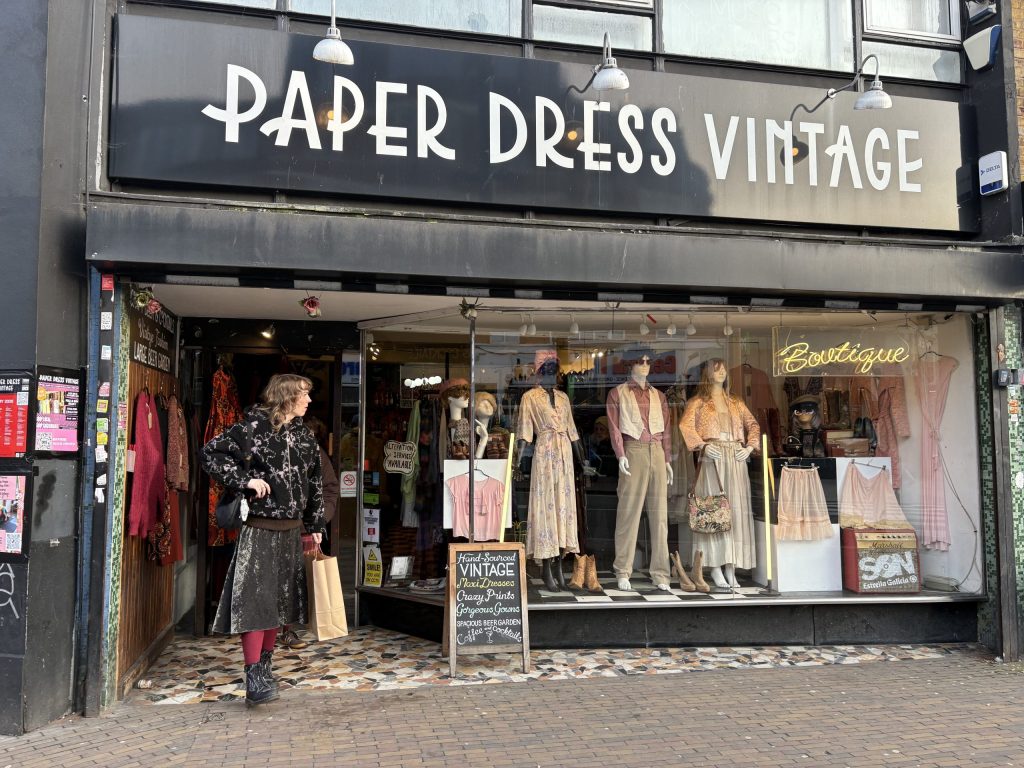
Dix said: “Paper Dress is very much a lifestyle business for us – a creative local institution blending fashion, culture and nightlife all in one.
“If we could stay here forever we would. Whether we’ll be able to afford to do that is another matter.”
Changing working patterns post-pandemic continue to impact the footfall many high street businesses were dependent on.
As can be seen from the ONS’ data, while London and it’s city centre’s footfall has increased marginally, it’s retail parks and districts still suffer as many workplaces maintain a work from home policy.
Dix said: “We’re opposite Hackney Central station and commuters popping in before or after work were a big part of our business. It’s starting to recover, but we’re still not back to where we were.”
Paper Dress Vintage was able to access the Culture Recovery Fund, a £1.57 billion support package announced by the Department for Digital, Culture, Media and Sport in July 2020 to help cultural organisations survive the financial impact of Covid-19.
But not all businesses have been able to adapt or secure support.
Lillie O’Brien, owner of London Borough of Jam, originally based her business in Hackney before being priced out of the area.
O’Brien said: “I moved my production out of London seven or eight years ago because I couldn’t afford a production space in Hackney anymore.”
Rising office and workspace costs across east London have accelerated the trend of smaller businesses leaving East London, compounded with private renting soaring above the national average.
Post-pandemic, Hackney’s private rental inflation soared by 18% between October 2021 to January 2025, more than double that of the national average which increased by just 7%.
Maisie Collins, owner of Hearth, a social enterprise bakery and café nestled in Hackney Wick, said her business’ rent is £80,000 a year.
Nearby warehouses are due to be redeveloped into flats from May, forcing creative businesses to leave.
Collins said: “In the development plan, they’re going first and then it’s us. It’s horrible to be in that situation, you can’t really plan for it.
“There are some retail shops there now, but most of them are still empty and they’ve been empty for the last four years because no one can afford them.”
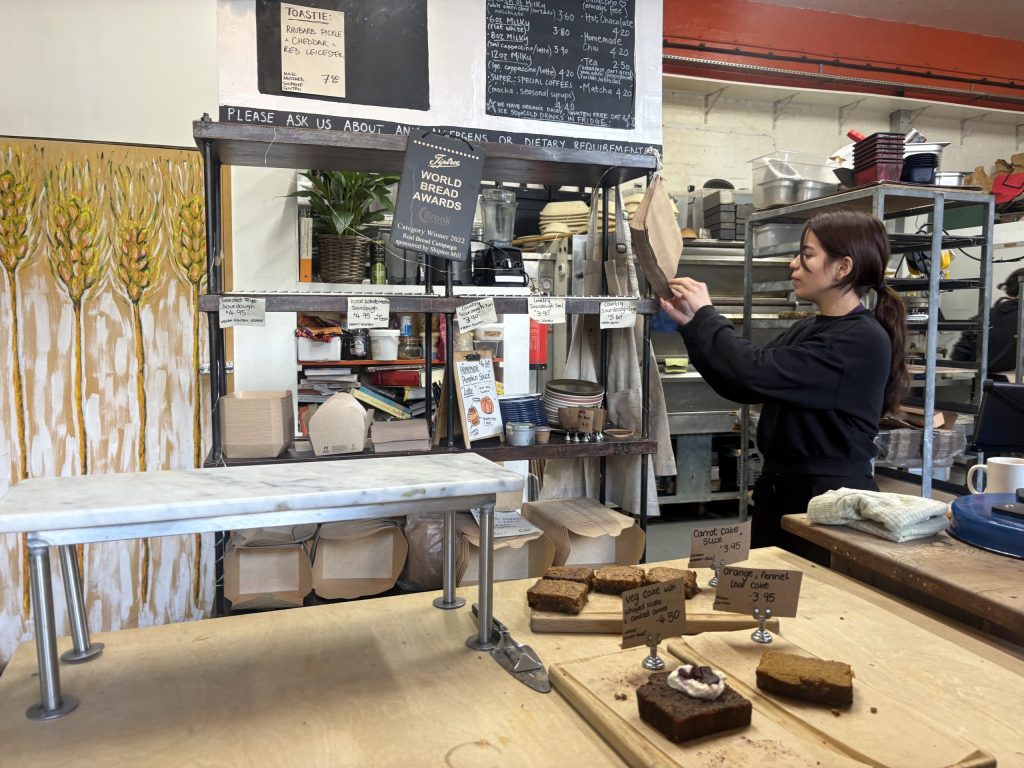
Collins expects to relocate elsewhere in London, ending her business’s presence in Hackney.
She echoed the sentiment of Hackney’s morphing creative identity saying: “I think it’ll just become such a squeaky clean, soulless area.”
Peter Roch, founder of Lineconic, a live, in-person game show and social event, started his business in Hackney and it has been able to thrive.
He said: “I think it requires a conscious choice by politicians to support smaller creative businesses.
“It’s making sure that people who have policy decision-making power are able to understand and see the value of these businesses beyond, perhaps supporting a tech business.”
A spokesperson from Hackney council said: “Hackney’s creative sector is at the heart of the borough’s identity and economy, and supporting small and micro creative businesses is a priority in our Economic Development Plan, which sets out our approach for inclusive growth over the next 10 years.
“As one of London’s fastest-growing local economies, we’re committed to ensuring Hackney remains an attractive place for businesses to start up, stay and grow. Our planning policies require affordable workspace in new developments, and apply Agent of Change principles to safeguard core sectors. We’ve also established an Affordable Workspace Provider List and the £1m Affordable Workspace Fund to help create and improve space for local businesses.
“We invest in business support through business grants, Hackney Impact, the Hackney Business Network and our Love Hackney Shop Local Campaign, and we are increasing spend with local suppliers through our Sustainable Procurement and Insourcing Strategy.
“We are also proud to host the Hackney Wick and Lower Lea Valley Creative Enterprise Zone, a joint initiative with Tower Hamlets supported by funding from the Mayor of London. Since its designation, creative jobs in the area have grown by 140% and the number of businesses by 30%, with most growth driven by small or micro creative businesses from the creative production sectors.”
Although the council points to investment and policy support, the pattern of smaller creative businesses being pushed out of the borough appears to be repeating itself with increasing frequency, raising questions about whether these measures are enough to protect the sector they aim to sustain.
Without targeted support, Hackney risks losing the independent cultural businesses that helped shape its identity, and the character that made it one of London’s most distinctive creative districts.
If smaller creative businesses in Hackney aren’t supported, the borough risks losing its individuality and the character that makes the hub of culture so popular with Londoners.
Featured image credit: Gemma Hamilton

Join the discussion