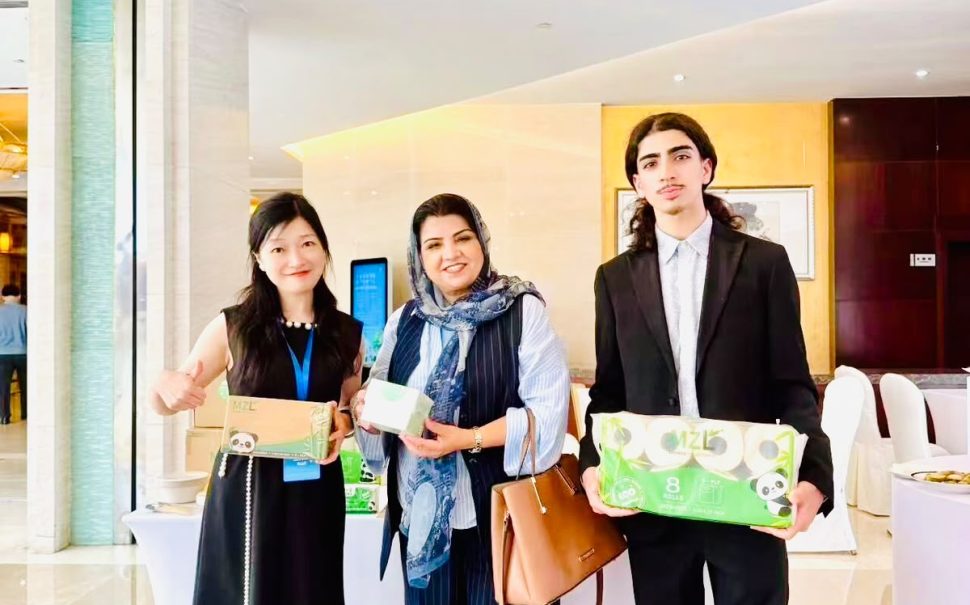
Afghans in the diaspora are using their voices to advocate for fellow women whose rights remain restricted under Taliban rule.
The Taliban’s Decree No. 18, Code on Judicial Separation of Spouses, published on 14 May 2026, is the latest measure in an ongoing assault on the rights of women and girls in Afghanistan.
The code links marital eligibility for girls to puberty, removing the previous legal marriage age of 16.
For Mahbooba Faiz, an Afghan activist living in Ireland, the decree is another reminder of why she has spent the past five years campaigning for gender apartheid to be recognised under international law.
Through her advocacy, Faiz founded OSYAN, a women-led organisation working to empower Afghan women and girls in Afghanistan and Ireland through education, advocacy, support for survivors of violence and community integration.
She also leads the Irish branch of the global End Gender Apartheid campaign, arguing that the treatment of Afghan women represents a system of institutionalised oppression rather than simple discrimination.
She said: “Girls are not for marriage, they belong to schools.”
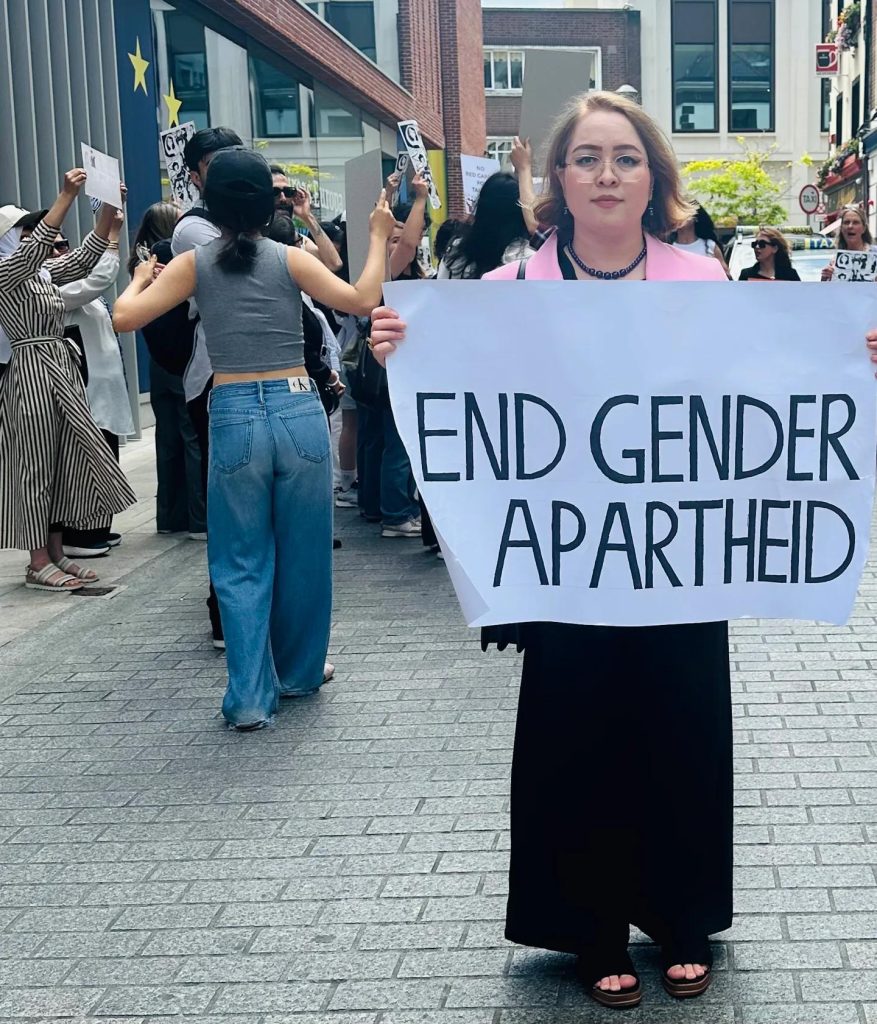
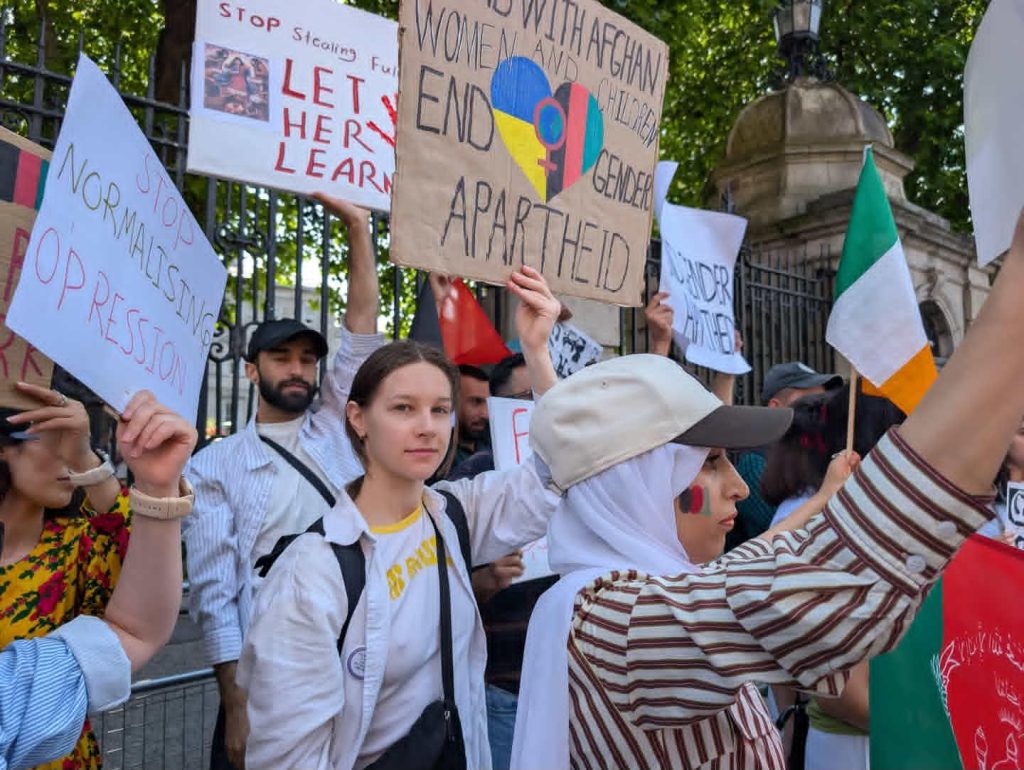
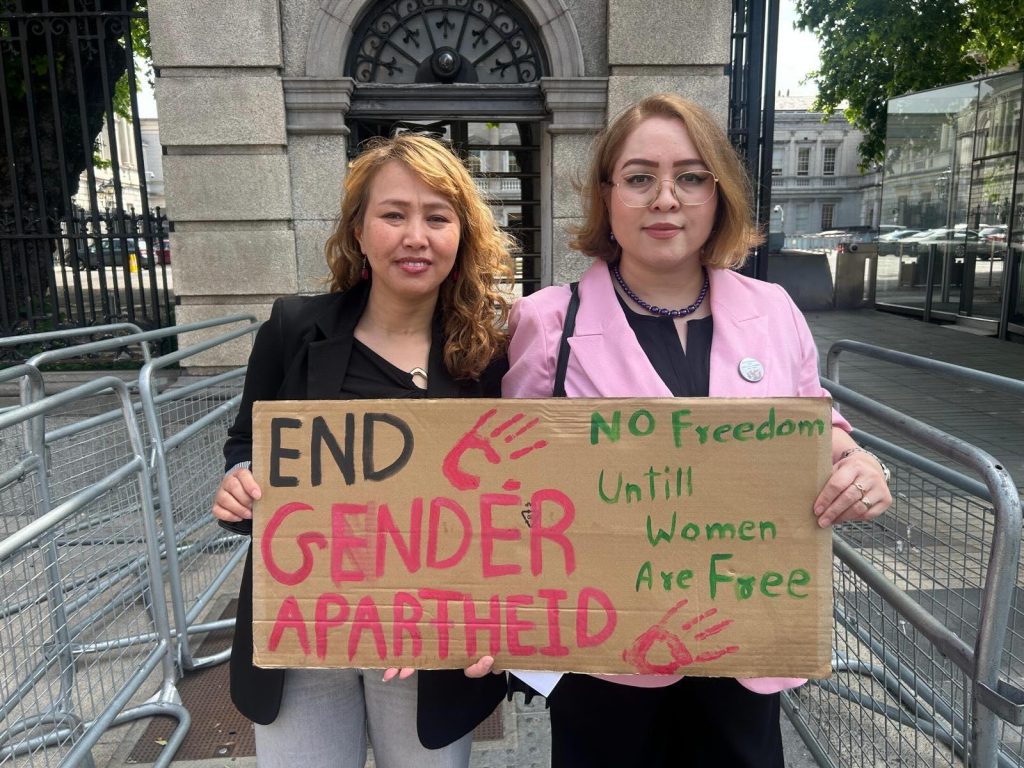
On 25 June, Faiz organised a protest outside Leinster House in Dublin, bringing together Afghan women’s rights activists alongside Irish politicians, councillors and supporters.
The demonstration called on Ireland to support recognising gender apartheid as a crime against humanity at the upcoming UN Convention on Crimes Against Humanity.
While advocating internationally, Faiz said refugee women often face misconceptions after arriving in their new countries.
“Refugee women are well educated,” she said.
“They are capable, the perception towards refugees should change.”
As Faiz campaigns for legal recognition on the international stage, others are focused on helping Afghan women rebuild their lives in Britain.
When Kamila Sidiqi arrived in London after fleeing Afghanistan in 2021, she had lost more than her home.
The entrepreneur, whose story was chronicled in the New York Times bestselling book The Dressmaker of Khair Khana, had spent 25 years building businesses in Afghanistan and founded the country’s first women-led consulting company before being forced to rebuild her career from the beginning.
“I lost all my achievements, 25 years of achievement in 24 hours,” she said.
Now, as co-founder of Kaweyan International CIC, a London-based community organisation in Lewisham, Sidiqi supports Afghan women rebuilding their lives in London by helping them develop skills, build confidence and create professional opportunities.
Through the organisation, women can access practical support including English classes, driving theory lessons, business training and networking opportunities.
Kaweyan has also expanded into women-led employment projects, including a tailoring cooperative involving around 20 women and a cleaning services cooperative currently in development.
For Sidiqi, entrepreneurship is not simply about generating income, it is about creating independence and opportunities that extend beyond one individual.
She believes that when Afghan women are supported to build businesses, the impact reaches their families and the wider community through job creation, financial security and greater participation in society.
“If we find one entrepreneur and support one person, she or he can support hundreds of other people in the community,” she said.
She argues that many barriers Afghan women experienced before migration continue in different forms after arriving in London.
Sidiqi identified five key challenges: access to education, lack of support, cultural barriers, access to finance and security.
However, she believes London also provides opportunities to overcome these obstacles.
“These five challenges are five opportunities in London if the women notice,” she said.
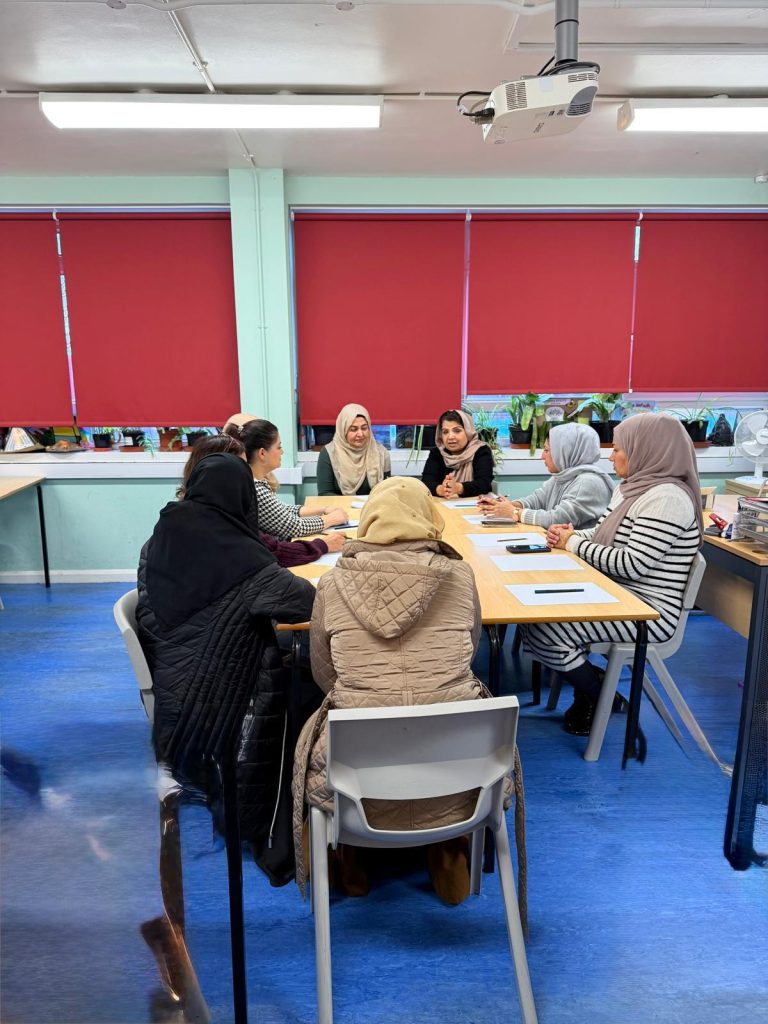
According to Sidiqi, the challenge is ensuring Afghan women are aware of the opportunities available to them.
That belief sits at the heart of Kaweyan’s new women-led community centre in Lewisham, which has already begun running community activities ahead of its official opening ceremony, expected to take place in the coming weeks.
The building was transformed by Afghan women themselves, who came together to clean, paint and design the space.
“It’s not my office, it’s a women’s community office,” Sidiqi said.
The centre has already begun hosting weekly Friday training sessions, while women have started working through its tailoring cooperative.
It also includes a dedicated prayer room for women and a small exercise space, reflecting Sidiqi’s vision of creating a community hub rather than simply an office.
The centre will provide Afghan women with a permanent space to learn, connect and build relationships, while creating a bridge between the Afghan community and the wider London community around them.
The building represents more than a physical space. It is a place where women can begin rebuilding their lives after displacement.
Alongside professional development, Sidiqi believes maintaining Afghan identity remains central to life in the diaspora.
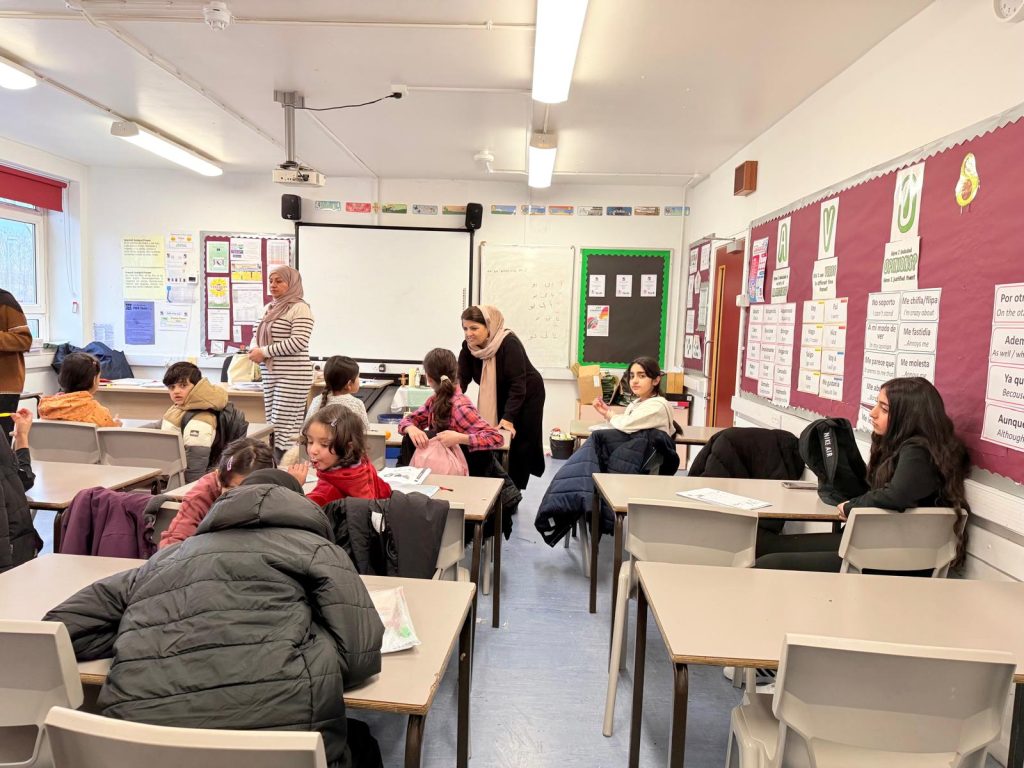
Through Kaweyan, she has established language classes where children and families can learn Pashto and Dari, allowing younger generations to preserve their connection to their heritage while building a life in Britain.
The classes have become more than a place to learn language, creating a space where Afghan families can meet, build friendships and maintain a sense of community.
Sidiqi is also preparing to launch See You Tomorrow, a restaurant and coffee shop in Lewisham with a business partner.
Although separate from Kaweyan International CIC, she hopes the business will create employment opportunities for women while providing a welcoming space where people from all communities can meet, work and connect.
She said the restaurant is intended to demonstrate women-led entrepreneurship while giving Afghan women practical experience in hospitality and business management.
It is designed to welcome everyone, while also creating opportunities for women to develop skills and confidence through business.
For both Faiz and Sidiqi, their work remains connected to the women still living under Taliban restrictions in Afghanistan.
Rebuilding their lives abroad has become a form of resistance in itself. Faiz’s organisation, OSYAN, meaning rebellion or disobedience, and Sidiqi’s Kaweyan, meaning brave, reflect the determination behind their work.
Faiz said the courage of women resisting Taliban restrictions is what drives Afghan women abroad to continue speaking out.
“They are really powerful. They are really resilient,” she said.
“They are resisting. They are trying to defy those oppressive rules the Taliban have imposed.”
For Faiz, advocacy is a responsibility shaped by the freedoms she now has outside Afghanistan.
“It is only the Afghan diaspora in different countries who are trying to keep the issue of Afghanistan alive,” she said.
According to Sidiqi, rebuilding is also a form of resistance: creating spaces where Afghan women can regain opportunities and independence that were taken away from them.
“We are the ones that can bring change,” she said.
“In our life, in our community, in our country.”
The work is continuing beyond the stories already told.
Faiz is preparing for further advocacy efforts to push for international recognition of gender apartheid, while Sidiqi is expanding Kaweyan’s work through new community programmes and women-led business initiatives in London.
Their progress abroad remains shaped by those who remain behind.
Every protest, classroom, community centre and business opportunity is a reminder that the freedoms Afghan women in the diaspora now have are also a responsibility to keep speaking, building and advocating for those who cannot yet do so themselves.
Feature image courtesy of Kamila Sidiqi, with thanks


Join the discussion