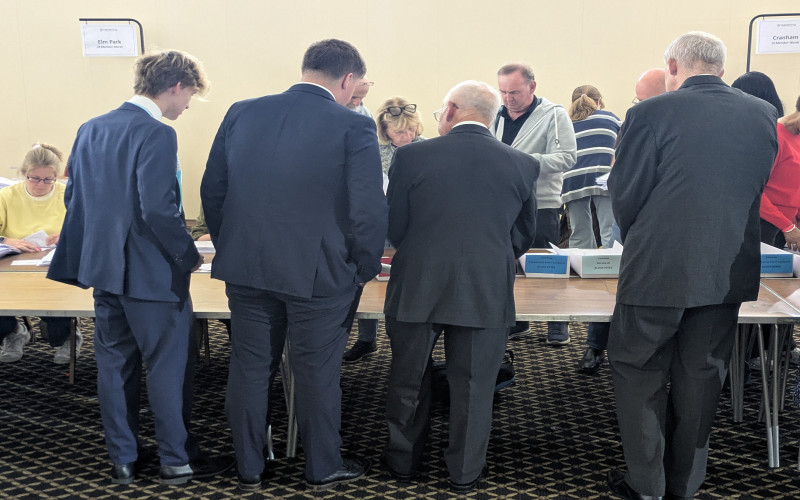
Candidates, political parties and policies dominate the headlines during an election. Yet behind every ballot cast is an army of people whose work keeps democracy in motion.
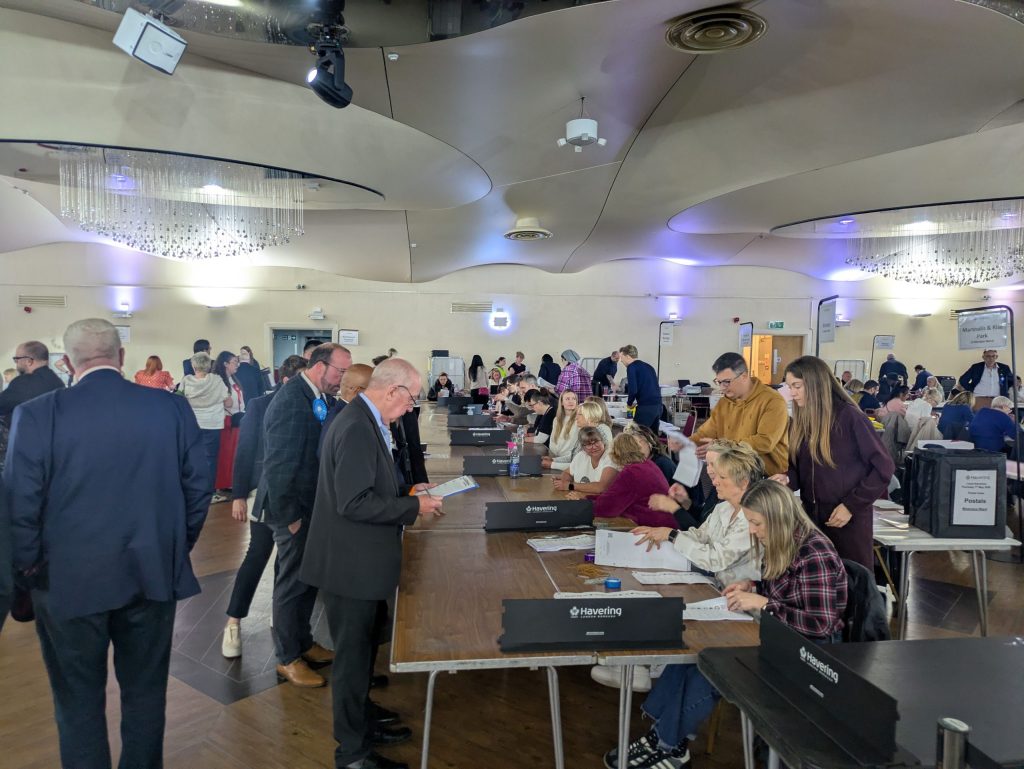
Observers play their own part in that role. Eagerly overlooking the count, tallying up the votes on their note pads, their role is unseen behind the TV cameras, but is front and centre of the count itself.
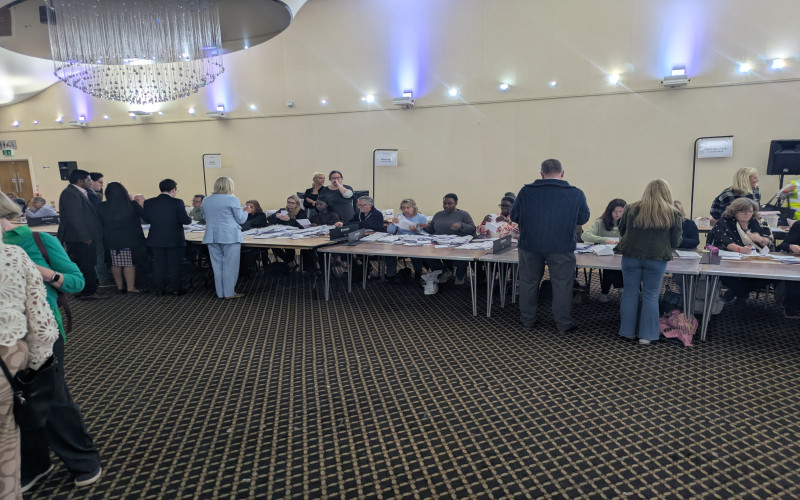
But who are observers?
Tony Holton, an observer at the local elections in May, said: “We have come to check that the papers are going into the right trays, according to the description of them.”
There role is simple, but vital for maintaining transparency around democracy in UK elections.
Almost anyone can be an observer, there are only two requirements: a person must be over the age of 16 and not linked to any political party or candidate.
The role is unpaid and they have the right to observe the poll, the vote count and verification and the issue and receipt of ballot papers.
However, parties will also bring along their own observers.
“We are not politically motivated to be a candidate, but we like to support the candidate, and we go to the functions like this,” Holton said.
For Holton, and many others, it is a valuable chance to back their candidate whilst getting involved with the election day fun.
“It’s quite exciting, isn’t it? Because nobody really knows the outcome (of the election),” Holton said.
Another role supporters like Holton have taken on is influencing at polling stations.
This involves standing outside the station, whilst respectfully campaigning for your chosen candidate.
Holton, who is a Reform UK supporter, said: “I can remember years ago when they used to ask the people coming out of the polling station who they had voted for, they don’t do that anymore.
“We were just there so people could see a rosette and think, ‘oh Reform’ and its then implanted in their brain for when they go and see Reform on the ballot paper.”
Community also plays a part for getting involved.
“It’s a community around the local MP. We have been to a lot of functions that have been organised on his behalf,” Holton said.
“The last function we went to was his birthday party.”
With more elections surely on the horizon, people like Holton may find their diaries becoming increasingly booked up.
Featured image credit: Oscar Stevens
Join the discussion