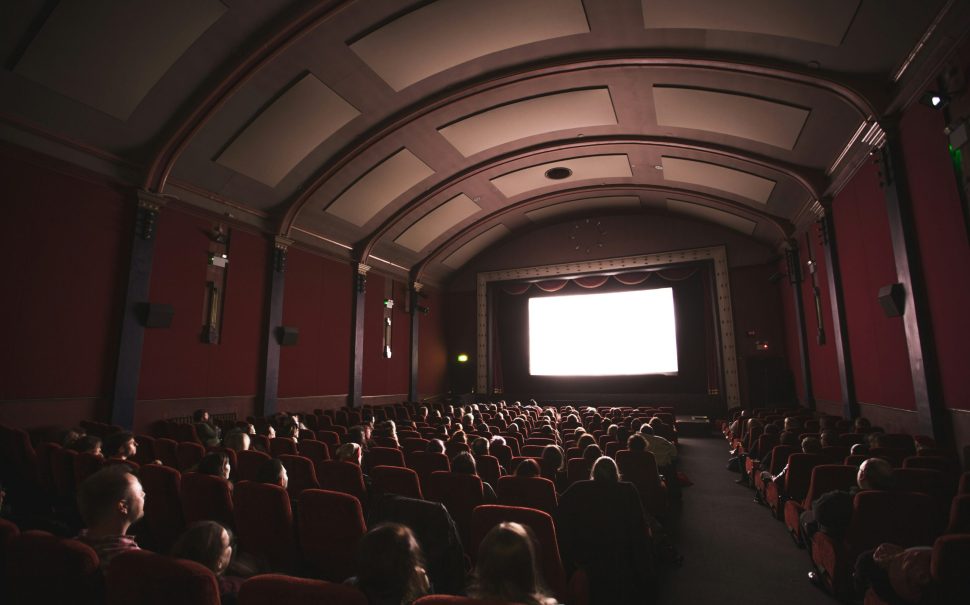
In an age saturated by doomscrolling, many of us are thinking the same thing: movies that once held our attention now feel harder to watch from start to finish.
Using data from Letterboxd, the North East Londoner analysed the average runtimes of the top 10 box office films each year over the past 30 years.
Between 2020 and 2023, the average film run times increased by 15%, before falling dramatically between 2023 and 2025, a 10% decrease.
Overall, since 1995, average runtimes have increased, with blockbusters steadily creeping past the two-hour mark – reflecting filmmakers’ willingness to craft more expansive and complex stories.
But has our perception of what counts as ‘long’ changed?
British director Naqqash Khalid, nominated for Breakthrough British/Irish Filmmaker at the London Film Critics’ Circle Awards, believes it has.
He said: “The attention economy has changed.”
“What we consider 154 minutes today, the value and ask of that, just on a chemical and perceptive level, is not the same 154 minutes of the 90s. If a film is going to be that long, it has to earn the ask of that.”
Although films are getting longer, modern viewing habits have changed. Many people now watch movies at home on streaming platforms, often pausing, multitasking, or splitting attention between their phone and the TV.
The rise of streaming services has transformed both where and how we watch films, reshaping how filmmakers tell stories.
Speaking recently on The Joe Rogan Experience to promote his latest film The Rip (118 minutes), Matt Damon highlighted the challenges of modern filmmaking.
He said: “You are watching in a room, the lights are on, other s**t is going on, the kids are running around, the dogs are running around. It is just a very different level of attention that you are willing, or that you are able to give to it.”
However, the top 10 most-streamed Netflix movies reveal that highly popular films are often on the longer side, with runtimes ranging from roughly 120 minutes up to 140 minutes.
Adam McKay’s Don’t Look Up is the fourth most streamed movie on Netflix, with a runtime of 143 minutes, significantly longer than the top-streamed K-Pop: Demon Hunters, which clocks in at just 95 minutes.
This suggests that while shorter films may attract larger viewership initially, audiences are willing to commit to longer narratives when the content is engaging and accessible on-demand.
Unlike theatrical releases, streaming allows audiences to pause, rewind, or watch in segments, reducing the barrier posed by longer runtimes in a cinema.
Filmmakers are encouraged to structure movies with multiple high-impact sequences and recurring plot reminders to maintain attention.
In an attempt to promote his new film, Damon further explained: “It is going to really start to infringe on how we are telling these stories.
“And it would not be terrible if you reiterated the plot three or four times in the dialogue because people are on their phones while they are watching.”
Franchises such as Harry Potter, The Lord of the Rings, and the MCU continue to dominate the charts, but early reports suggest Avengers Doomsday could be one of Marvel’s longest films, with speculation that it could run to 225 minutes, almost four hours long.
Ensemble finales and crossover events are consistently the longest MCU films, reflecting the need to balance multiple characters, subplots, and action sequences, which suggests that despite concerns about modern attention spans, audiences tolerate and even expect extended runtimes when the content is engaging.
This trend is evident in the franchise’s growing runtimes: early entries like Iron Man and Thor ran 120–130 minutes, The Avengers (2012) reached 143 minutes, Avengers: Infinity War (2018) 149 minutes, and Avengers: Endgame (2019) peaked at 181 minutes.
Despite concerns about shrinking attention spans, audiences continue to tolerate and even expect extended runtimes when the content feels eventful.
However, Khalid suggests that expectations differ depending on context, suggesting cinema screens offer something distinct from everyday distraction.
He said: “An audience for an independent film versus a studio film will have different expectations from that kind of filmmaking.
“We go to the cinema to see a different reality on screen, experience characters, a specific vision or viewpoint of the world.”
As short-form platforms such as TikTok, Instagram, and YouTube Shorts condition audiences to expect rapid rewards and instant stimulation, many viewers carry habits of multitasking into longer-form viewing.
However, Khalid maintains that length itself is not the issue.
Has said: “A film is an act of imagination and invention, and should be as long or as short as the filmmaker has designed it to be.”
Although films are getting longer and attention habits are shifting, audiences still commit to three-hour epics and sprawling ensemble finales.
When a film truly earns its runtime, it appears viewers can still find the time, patience, and focus to follow it.
Featured image: Jake Hills on Unsplash
Join the discussion