Newham is the most deprived borough in London, data from the 2025 Indices of Multiple Deprivation (IMD) has revealed.
Three quarters of the borough fell into the bottom 30% for total deprivation and more than four-fifths was in that category for income deprivation – a significant jump from two-thirds in the latter category in 2019.
The North East of the capital saw Barking and Dagenham and Hackney also in the top three for deprivation in the capital.
Newham was also the only one of the three worst performers to see an increase in overall deprivation, with Dagenham and Hackney witnessing drops of 7% and 17% respectively.
Nye Jones, campaign lead for renters rights group Generation Rent, previously told the Londoners believes housing is a major factor driving the borough’s plight.
He said: “The combination of really high rent and low incomes, which is most pronounced in Newham, creates poverty and destitution.”
Trust for London data backs Jones up, with 58 out of every 1000 Newham households living in temporary accommodation and repossessions per 1000 standing at 8 – by far the worst in the city and almost three times the Greater London average.
Unemployment is also a significant concern, with the borough’s 8.7% yet again the worst in the capital, while a child poverty figure of 45% ranks it joint-second with Hackney, and behind only Tower Hamlets.
The borough’s fortunes could be set to change in the coming years, however, if plans to relocate the Billingsgate and Smithfield Markets go through.
Originally expected to move to Dagenham, the markets now look set to head to the Royal Docks – and mayor Rokhshana Fiaz OBE is well aware of the impact their arrival could have.
Speaking to Newham Council’s news department last month, she said: “The relocation of two of London’s historic markets to Newham promises new jobs, homes, and opportunities.
“This move will open strong commercial and employment prospects for residents and add fresh energy along the water’s edge.”
For Dagenham, meanwhile, the aborted plans are another blow for a struggling area.
In addition to seeing a 14% rise in income deprivation since 2019, the borough also has unemployment of more than 8%, and the joint-fourth worst child poverty rate in the city at 43%.
Dagenham is also the unhappiest place in the UK, ranking right at the bottom of Rightmove’s 2025 Happy at Home Index.
But Nathan Singleton, from the charity Lifeline Projects, told the Londoners that the giant’s study is not representative of how locals really feel about the borough.
He said: “The people that we speak to are generally happy, and feel positive about the future.
“There are problems, but there is also a strong sense of community spirit in Dagenham.”
On the surface Singleton’s optimism doesn’t seem entirely misplaced, with Be First – an urban regeneration company owned by Barking and Dagenham Council – currently in the midst of delivering 20,000 new jobs as part of a 20-year renewal programme.
But with more than one in five people in Dagenham still in low-paid work over eight years into the initiative, it is clear that significant progress still needs to be made.
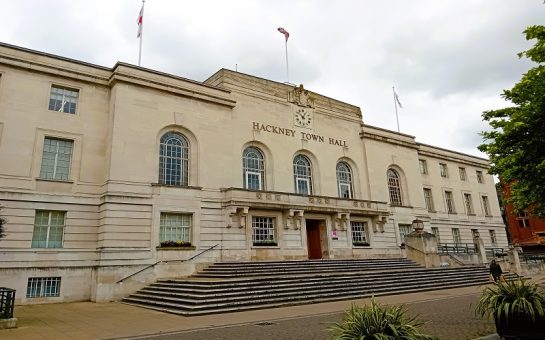
Hackney, by contrast, appears to be significantly better positioned for growth.
Although almost half of the borough’s children are in poverty, and nearly a fifth of its residents on benefits, the overall poverty rate is no worse than the London average of 26%.
The figure for repossessions per thousand households stands at just 1.92, below the city average of 2.86.
And overall deprivation stands at just 63%, having been an eye-watering 80% six years ago – with income deprivation also falling by two percent.
Despite such promising signs, Jenna Fansa – Head of Communications and Fundraising at Hackney Foodbank – is under no illusions there is still a long way to go.
Like Jones, she told the Londoners that housing costs are a particularly pertinent issue driving deprivation.
She said: “We see the results of high rents here. There needs to be an understanding that some areas are very expensive to live in.”
Fansa went on to call for more employers in Hackney to pay the National Living Wage, in order to help residents better afford such eye-watering rates.
And she also hailed the efforts of the council, claiming they have worked tirelessly to try and pull the borough out of the mire.


Join the discussion