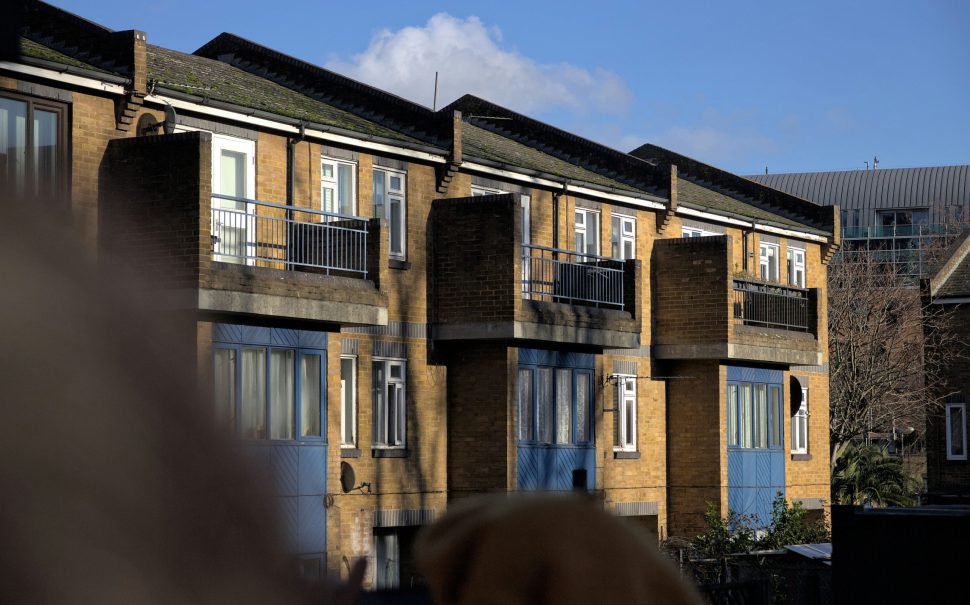
London saw fewer house sales in 2024 than in 2008 when the housing market collapsed, according to data from the Office for National Statistics.
Last year, just 68,000 homes were sold in the capital, compared to more than 82,000 in 2008.
Since 2006, house sales in London have fallen by 60% and have never exceeded those prior to 2008.
When the housing market stagnates and transactions fall, Londoners become trapped in homes that no longer meet their needs and first time buyers struggle to get on the property ladder.
All whilst economic activity around homes weakens, from renovations to retailers, creating a ripple effect across the economy.
There have been housing mobility schemes that aimed to tackle the problem, like the help-to-buy scheme, but a 2017 London School of Economics report found low-cost home ownership schemes disproportionately benefited those better off.
First time buyers bought 59% of the homes in the capital in 2024, but in some areas like Barking and Dagenham figures can be as high as 96%.
Today, even those who are in privileged positions, such as 30-year-old AI start-up founder Sam Mundy, struggle to buy in London.
Mundy bought his own home in Southampton when he left university, and lets that property out, while renting in Tooting.
Though living in London is worth a lot to him, finances are still stopping him from buying his dream home.
He said: “If we had the money we’d buy a place. We’d probably have to sell our current house to help towards a deposit and bring the monthly payments down.
“I think the negative of not paying down the mortgage on an interest only would be outweighed by the positive of buying a house in London.
“However, the way taxes are increasing in the budget and pensions and ISA allowances being screwed, having the second home rented out is a good asset for the future.”
Over the course of the pandemic sales in the capital reached the highest levels since 2016, with London seeing more than 115,000 homes sold in 2021.
Estate agents in the capital cited house prices and stamp duty as the some of the causes of low sales.
Mary-Lou Press, President of the National Association of Estate Agents (NAEA Propertymark) agreed.
Press said: “Housing mobility in London is being held back by persistent affordability pressures, and a shortage of suitable homes to move into.
“If we want to make it easier for people to move house, we need a more fluid, better-balanced system.”
According to the House price index from HM Land registry, the average house price in London was £464,000 in 2014 rising to £605,000 in 2024 – a 30% increase.
In fact, London’s 3.8 million homes are worth an estimated £2.6 trillion, approximately a quarter of the UK residential market according to Zoopla.
People selling their homes also get cautious at times like these, according to a former estate agent.
The wait for a sellers market results in a snowball effect, raising house prices in the long run as demand increases.
The leader of the Conservative party Kemi Badenoch has pledged to scrap stamp duty for main house purchases if the Conservatives win at the next general election.
The NAEA Propertymark president said: “Targeted Stamp Duty reform would make an immediate difference.
“The current structure can discourage many would-be movers, especially growing families and older homeowners.”
According to Press, reducing thresholds or introducing reliefs for downsizers would free up much-needed stock across the market.
Increasing dwelling stock is often stated as being a fix to the housing crisis, bringing down house prices, coping with demand and getting Londoners moving again.
Press claimed simplifying the process to build affordable homes and make faster planning decisions would benefit Londoners.
The number of residential homes in London has only increased by 11,500 between 2014 and 2024.
The population of London has increased by more than half a million people over the same period according to figures on Macrotrends.
To cope with the increased demand housing development would have to increase significantly.
The Treasury was reached out to for comment.
Feature Image credit: Photo by Guilherme Fontes via Unsplash


Join the discussion